

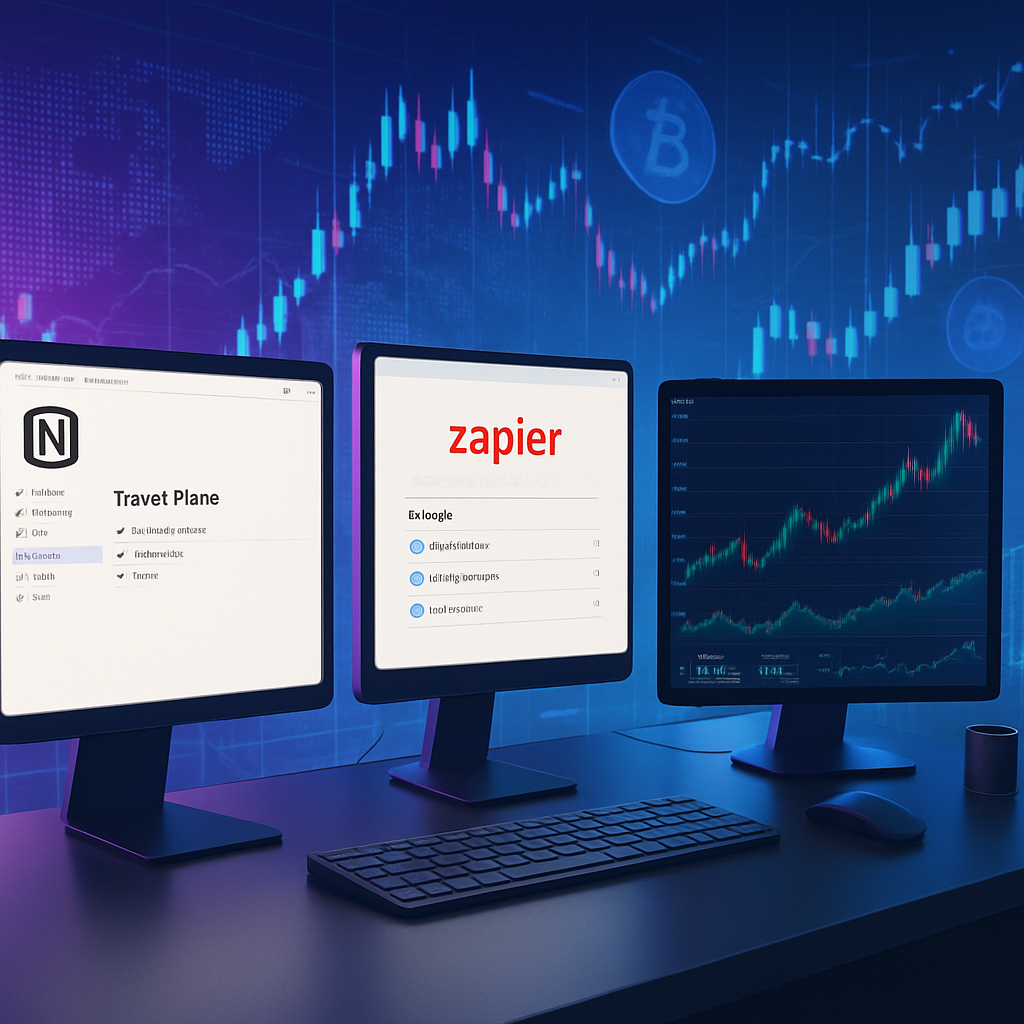
Struggling to keep up with the fast-paced world of crypto news, DeFi updates, and market movements? Discover how to automate your crypto research workflow using modern productivity tools—so you never miss a beat again.
Why You Need a Workflow for Crypto Research
In 2025, the crypto space has matured beyond hype cycles and moonshots. With institutional players dominating the market and financial data hidden in filings and custody deals, staying informed is not just a hobby—it’s a competitive advantage.
Whether you’re a crypto trader, DeFi builder, or Web3 researcher, the volume of information can be overwhelming. You need a systematic, automated workflow to collect, organize, and review insights across news, on-chain data, and research protocols.
The Tools You’ll Need
- Notion: For organizing your research and creating a knowledge hub
- Zapier: To automate data collection and task triggers
- Readwise: For syncing highlights and summarizing articles from major crypto sources
- Feedly: To curate RSS feeds from top crypto websites like CryptoSlate
Step 1: Centralize Your Research in Notion
Create a Notion database called Crypto Knowledge Base. Use templates to structure content by category:
- Market Insights: For macroeconomic news (e.g. inflation reports, rate moves)
- On-Chain Data: Metrics like hash rate, active wallets, and demand indicators
- Protocol News: Updates from Ethereum, Solana, and emerging platforms
- Tokenomics: Analysis of supply/demand mechanics, vesting, governance
This becomes your personal crypto research wiki.
Bonus: Use the Notion Web Clipper to save articles directly to your database.
Step 2: Automate Content Ingestion with Zapier
Next, use Zapier’s RSS trigger to monitor news from trusted sites like:
- CryptoSlate
- CoinDesk
- The Block
- Bankless
Set up a Zap like this:
- Trigger: New item in RSS feed
- Action: Create a new Notion page in your Crypto Knowledge Base
You can auto-categorize based on keywords like “Bitcoin,” “Ethereum,” or “Custody.”
Step 3: Highlight & Summarize with Readwise Reader
With Readwise Reader, you can highlight key insights from long-form pieces—like the recent one on how major banks now control Bitcoin’s market structure.
Enable the Notion sync in Readwise to send highlights straight into your database. This keeps your notes centralized and searchable.
Pro tip: Tag highlights with themes like #macro, #tokenomics, or #infra so you can filter insights later.
Step 4: Create a Weekly Review Workflow
Use Notion’s calendar view to schedule a weekly review—say every Friday morning. During your review, go through:
- Trending macro narratives (e.g. inflation, rates, liquidity)
- Emerging protocol shifts—TEN Protocol’s new privacy layer could be a game-changer for Ethereum
- Wallet and infrastructure risks—like Solana ending Saga phone support
This ritual will help you distill signals from noise—especially when price action stalls, as it did around Bitcoin’s $90,000 resistance despite rate cuts.
Step 5: Optional Add-Ons for Power Users
Want to take it further? Here are some power moves:
- Use Notion AI to summarize imported articles or generate TL;DRs
- Integrate Alethio for Ethereum on-chain data feeds
- Set up alerts for wallet transfers using Etherscan APIs
🚀 Ready to Build Your Automated Research Workflow?
With the right stack—Notion, Zapier, Readwise—you can build a personalized, automated research engine that works while you sleep. No more tab overload. No more missed insights.
Start with Zapier for free today and connect your favorite crypto news sources into a single powerful workspace.
💡 Bonus: Get Our Free Notion Template
Want to skip the setup? Grab our pre-built Crypto Research Workflow Template for Notion—it includes databases, templates, and tags to get you started in under 10 minutes.
➡️ Click here to download it for free
Conclusion
Crypto in 2025 is not just about hype—it’s about having the right information at the right time. With this automated Notion + Zapier + Readwise stack, you can stay miles ahead of the curve and make smarter decisions without burning out.
Start building your edge now—because in Web3, information is alpha.