

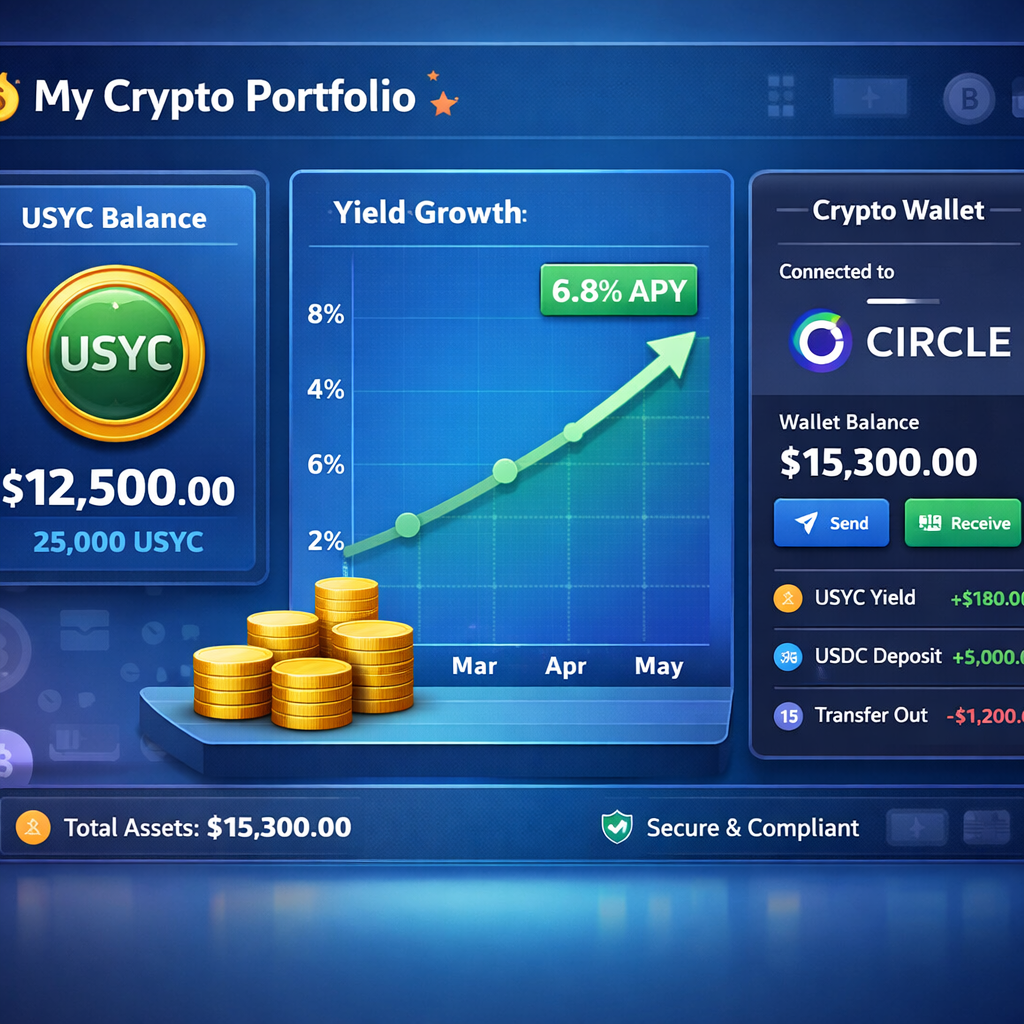
Tokenized U.S. Treasuries are now a $10B infrastructure—not a concept. Learn how to take advantage of Circle’s USYC to build a stable, yield-generating portfolio in minutes.
Why Tokenized Treasuries Matter in 2026
In January 2026, tokenized U.S. Treasuries surpassed $10 billion in total value, signaling a major shift in how both institutions and individuals manage capital. While BlackRock was the early leader, Circle’s USYC token has recently taken the lead. Why? USYC is more accessible, easier to integrate, and optimized for composability.
This guide will walk you step-by-step through setting up your own portfolio using Circle’s USYC tokens, providing a secure and efficient way to earn yield backed by U.S. government debt without leaving the blockchain.
What You’ll Need Before You Start
- A Web3 wallet (e.g., MetaMask, Ledger, or Coinbase Wallet)
- Stablecoins or fiat to convert to USYC (USDC recommended)
- Access to an approved platform that supports USYC, such as Circle, Compound, or Aave
- KYC verification with Circle or your chosen DeFi protocol (if required)
Step 1: Set Up or Connect Your Web3 Wallet
If you don’t already have a Web3 wallet, follow this quick setup:
- Go to MetaMask and install the browser extension.
- Set up your wallet and store your seed phrase securely.
- Connect your wallet to the Ethereum or Avalanche network (USYC supports both).
Already have a wallet? Simply connect it to your preferred platform.
Step 2: Convert Your Holdings to USDC
Since USYC is minted using USDC as collateral, you’ll need to hold USDC first. Here’s how:
- Use a DEX like Uniswap or 1inch to swap ETH or other tokens to USDC.
- Alternatively, use centralized exchanges like Coinbase or Kraken to buy USDC and send it to your wallet.
Make sure you’re using USDC on the same chain where you intend to mint or acquire USYC (Ethereum or Avalanche).
Step 3: Acquire USYC Tokens
Now that you have USDC, you can mint or swap it for USYC:
- Go to Circle’s USYC portal (business users) or a DeFi app supporting USYC like Mercurial.
- Connect your wallet and complete KYC, if prompted.
- Choose the “Mint USYC” option and specify the amount of USDC to convert.
- Confirm the transaction in your wallet. You’ll receive USYC tokens in return.
Note: Retail users can also acquire USYC via secondary markets or liquidity pools on Curve or Uniswap.
Step 4: Put USYC to Work
Now that you hold tokenized treasuries, you can:
- Hold USYC to earn passive income via U.S. Treasury yields (automatically embedded in token value)
- Provide liquidity on platforms like Curve to earn swap fees and additional yield
- Use USYC as collateral in DeFi protocols such as Aave or Compound to borrow against your position
For example, go to Aave, supply USYC, and see your borrow limit increase instantly.
Step 5: Monitor Performance and Risks
Tokenized treasuries are low-risk, but not risk-free. Here’s how to stay safe:
- Track USYC performance through Dune Analytics dashboards or DeFi tools like Zapper
- Use hardware wallets for long-term holdings
- Review Circle’s transparency reports at circle.com/transparency
Bonus: Automate Treasury Management with Smart Contracts
If you’re a developer or power user, automate your treasury workflows:
- Use USYC APIs to integrate mints/redemptions into your dApp
- Deploy vaults using Safe (formerly Gnosis Safe) to manage shared treasuries
- Combine with yield aggregators to optimize returns
Pro tip: Use Chainlink oracles to monitor treasury rates and create dynamic risk-adjusted strategies.
Conclusion: The On-Chain Treasury Era Is Here
Circle’s USYC token has made it easier than ever to access U.S. Treasuries through DeFi. Whether you’re an institution looking for yield or an individual seeking a crypto-native savings vehicle, tokenized treasuries offer both safety and flexibility.
✅ Ready to start? Set up your USYC portfolio now and earn passive yield with minimal risk.
Need More Help?
If you’re unsure how to begin or want to build a custom on-chain portfolio, book a free 30-minute strategy session with a DeFi onboarding specialist.
Stay safe, stay yield-positive.