

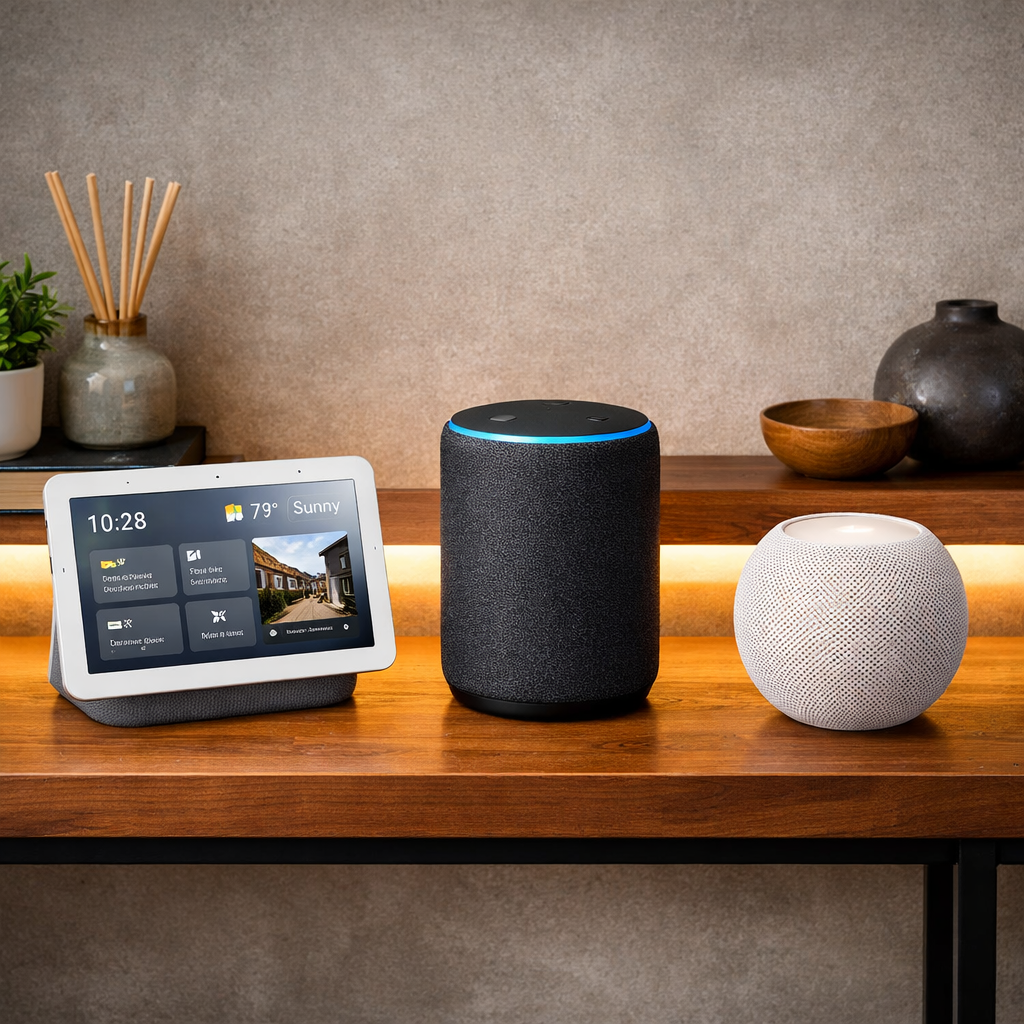
Are you overwhelmed by smart home options? We pit Google Nest, Amazon Alexa, and Apple HomeKit against each other to help you choose the best setup for your lifestyle.
Introduction: Welcome to the Future of Living
Smart homes are no longer science fiction—they’re here, making everyday tasks easier, safer, and more automated. But with so many ecosystems available, choosing the right one can be challenging. In this article, we compare Google Nest, Amazon Alexa, and Apple HomeKit across key categories: device variety, ease of automation, integration, privacy, and cost.
1. Device Ecosystems: Variety and Compatibility
Amazon Alexa leads in device support. Thanks to its open ecosystem, Alexa works with over 100,000 smart home products. From smart plugs to security systems, it’s likely Alexa-compatible.
Google Nest offers deep integration with Google services and supports many third-party products, although not quite as many as Alexa.
Apple HomeKit is more restrictive, requiring devices to meet high security and privacy standards. While the number of supported devices is growing, the selection is still more limited.
Click here to browse Alexa-compatible devices
2. Setup and Automation
Alexa: Setup is quick, and automations (called Routines) are easy to create. Use the Alexa app to schedule lights, lock doors, or play music when you arrive home.
Google Nest: The Nest app and Google Home app work in tandem. Automations, or Routines, can be voice-activated or scheduled. Integration with Gmail and Calendar is a bonus.
HomeKit: If you’re in the Apple ecosystem, setup is seamless. Use Automation in the Home app or create advanced Shortcuts across devices. Requires a HomePod, iPad, or Apple TV as a hub.
Explore Apple Shortcuts tutorials
3. Voice Assistants: Who Talks Best?
Amazon Alexa is the most conversational. It supports third-party Skills for customization.
Google Assistant is more informative, integrating with Google Search and Maps better than the rest.
Siri focuses on privacy and is great for Apple users, but lacks the flexibility of Alexa or Google.
4. Privacy and Security
Apple HomeKit wins in privacy. It uses end-to-end encryption and stores home data locally whenever possible.
Amazon and Google have improved their security measures, but their business models rely more heavily on data collection.
Learn how Apple protects your smart home privacy
5. Cost and Long-Term Value
Amazon Alexa devices often start cheaper, and frequent discounts make it easy to expand your setup.
Google Nest devices are mid-range in price, with great value if you’re already using Google services.
Apple HomeKit tends to cost more, but if you’re in the Apple ecosystem, the seamless experience might be worth it.
6. Real-World Automation Example
Let’s say you want your lights to turn on at sunset, play relaxing music, and lock the door at 10 PM:
- Alexa: Create a Routine in the app using triggers like time or voice command.
- Google Nest: Use the Home app to set up a similar Routine with location-based triggers.
- HomeKit: Use the Home app or Shortcuts to create a Scene that activates lighting, music, and security based on time and occupancy.
Watch this tutorial to create a smart bedtime routine using HomeKit
7. Final Verdict: Which Smart Home Ecosystem Wins?
For flexibility and device support: Amazon Alexa
For Google service integration and ease-of-use: Google Nest
For privacy and Apple users: Apple HomeKit
Call to Action #1
Ready to build your smart home? Start with Alexa-compatible kits or explore Google Nest bundles today.
Call to Action #2
Want expert tips and automation guides? Subscribe to our newsletter for weekly smart home tutorials and gear reviews.
Conclusion
The best smart home ecosystem depends on your priorities: cost, compatibility, automation needs, or privacy preferences. Whichever you choose, the key is consistency—mixing systems can lead to fragmented control and lost features. Make your pick and start automating!