
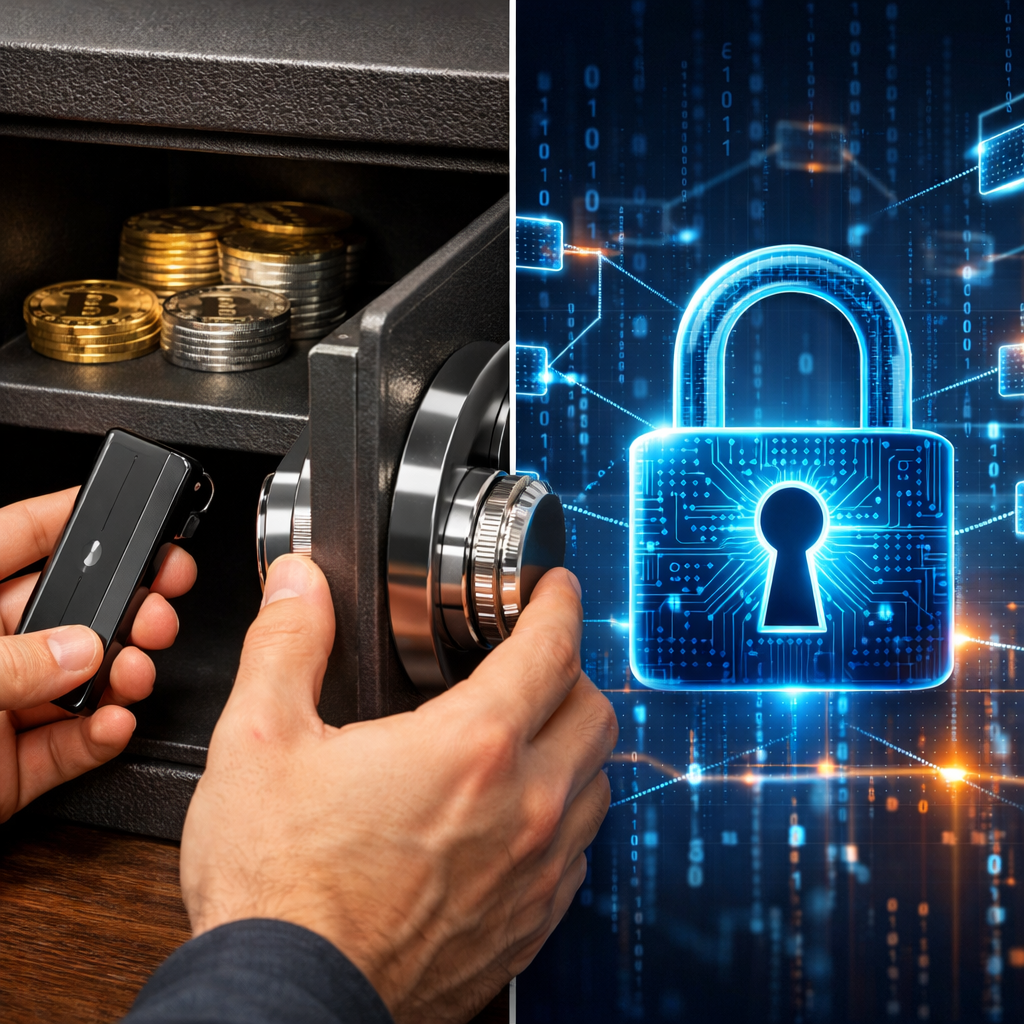

2025 marked a dangerous turning point for crypto investors. Beyond hacks, physical attacks surged. In this guide, we break down how to choose the safest wallets and shield your private keys—because digital security is no longer enough.
Why Wallet Security Matters More Than Ever in 2026
According to CertiK’s 2025 report, wrench attacks—where someone is physically coerced to give up private keys—jumped 75% year-over-year. This shows that your crypto wallet’s protection is no longer just about anti-phishing or malware; you now need to plan for real-world security risks.
At the same time, regulatory clarity in Europe through MiCA and institutional adoption (e.g., ING Germany’s crypto rollout) is bringing new users into the market—many of whom lack experience with wallet security.
Hot Wallets vs. Cold Wallets: What’s the Difference?
Let’s quickly recap:
- Hot Wallets: Connected to the internet. Examples: MetaMask, Trust Wallet, Rabby.
- Cold Wallets: Completely offline. Examples: Ledger, Trezor, Foundation Passport.
Rule of thumb: Hot wallets are for convenience, cold wallets are for long-term security.
Top Wallets in 2026 and Their Security Features
1. Ledger Nano X (Cold Wallet)
- Bluetooth-enabled with mobile support
- Secure Element chip (EAL5+ certified)
- Supports 5000+ coins and tokens
Best for: Long-term holders wanting multi-asset storage
2. Trezor Model T (Cold Wallet)
- Open-source firmware
- Touchscreen interface
- Passphrase support and Shamir backup
Best for: Security-conscious users valuing transparency
3. MetaMask + Keystone Pro (Hybrid Setup)
- MetaMask for browser integration
- Keystone Pro for air-gapped cold signing (QR-based)
Best for: DeFi users needing frequent access with cold storage signing
4. Rabby Wallet (Hot Wallet)
- Built-in transaction simulation
- Auto-chain switch for multi-chain DeFi
- Open-source and audit-friendly
Best for: Advanced users in DeFi who want extra predictability and safety
How to Create an Ultra-Secure Backup Strategy
Step 1: Use a Hardware Wallet
Never store large amounts of crypto on software wallets. If you do, make sure they’re used only on clean, dedicated devices.
Step 2: Offline Seed Phrase Backup
- Write down your 12 or 24-word seed phrase on paper or use a metal backup like CryptoSteel.
- Never take a photo or screenshot of your seed phrase.
- Store backups in two separate, secure, and private locations.
Step 3: Add a Passphrase (25th Word)
Many wallets support an optional passphrase. This adds a hidden layer. Without it, the seed phrase alone is useless.
Example: Trezor, Keystone, and Foundation all support this feature.
Step 4: Use Multisig for High-Value Holdings
Consider using Sparrow Wallet or Unchained Capital to create a multi-signature wallet setup (e.g., 2-of-3).
This helps reduce single points of failure and makes wrench attacks less effective.
🔥 CTA #1: Maximize Your Wallet Security
Not sure which wallet setup is best for your needs? Download our free PDF: “Crypto Wallet Security Blueprint 2026” and build your custom setup—step-by-step!
How to Avoid Becoming a Wrench Attack Victim
With physical threats on the rise, here’s how to stay safe:
- Don’t brag about crypto holdings on social media.
- If you must access wallets on the go, use a decoy wallet with small balances.
- Consider setting up geo-redundant backups or storing your seed phrase in a safety deposit box abroad.
- Keep your cold wallets in hard-to-access, hidden areas at home.
In a world where physical attacks are up 75%, treating your crypto like cash or gold at home is no longer optional—it’s essential.
Bonus: Software Tools That Enhance Security
- Tails OS – Use a secure, amnesic OS for seed generation and signing.
- GPG4Win – Encrypt sensitive data (e.g., passphrases) before cloud backup.
- Cryptomator – Encrypt seed phrase images or QR backups (if necessary, but not recommended).
Common Mistakes That Can Cost You Everything
- Storing seed phrases in email, cloud drives, or screenshots.
- Using wallets downloaded from unofficial sources or Google Ads.
- Forgetting passphrases or not testing wallet recovery before funding.
🚨 CTA #2: Bookmark Our Wallet Security Toolkit
Stay updated with wallet security checklists, threat alerts, and reviews. Click here to join our free Telegram group and stay informed as threats evolve.
Final Thoughts
With geopolitical uncertainty, rising adoption, and evolving threats, 2026 demands a new level of self-custody intelligence.
Your security stack isn’t just digital anymore—it’s physical, psychological, and procedural.
Choose wallets that support your specific use case, follow strong opsec, and never stop learning. Your financial sovereignty depends on it.


0 Comments