
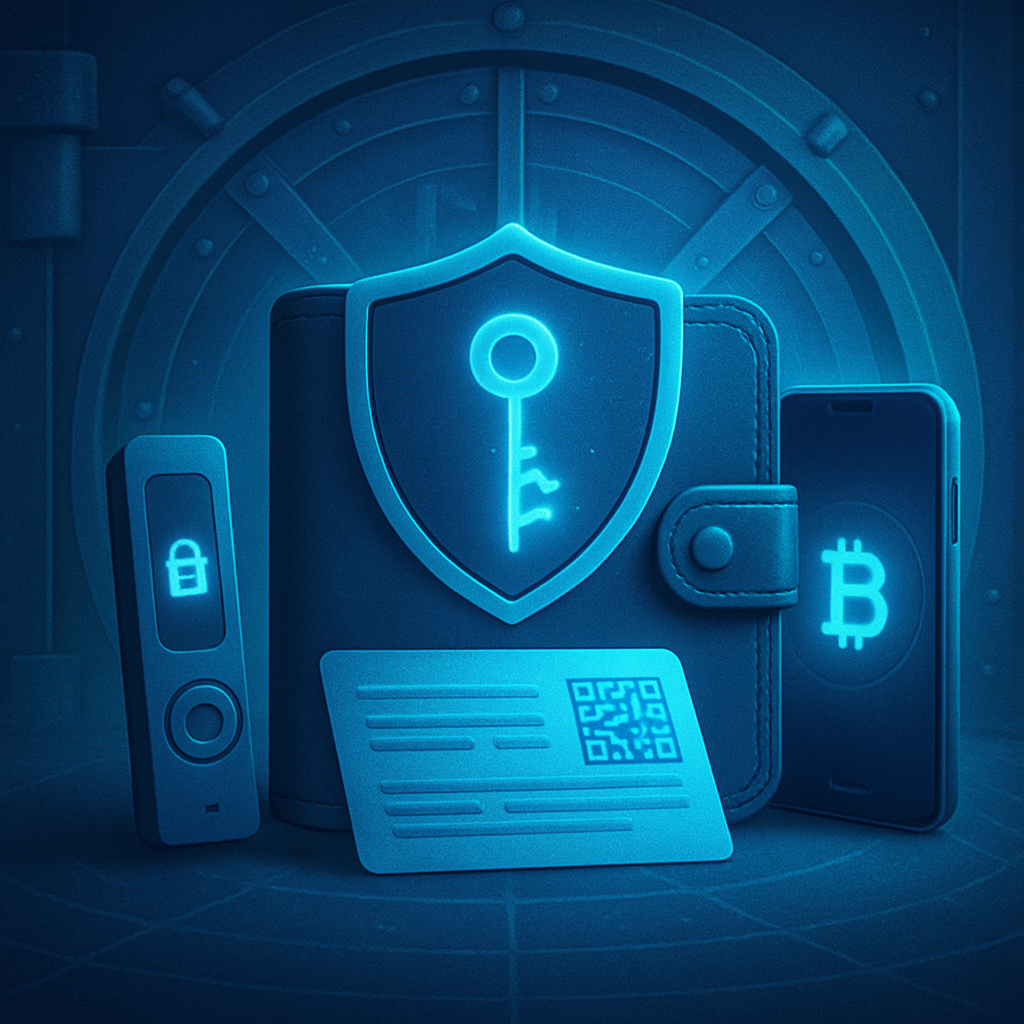

Your crypto wallet is only as secure as your habits. In this guide, we break down the best wallets, how to use them safely, and how to never lose your funds.
Why Wallet Security Should Be Your #1 Crypto Priority
In a space where “not your keys, not your crypto” is gospel, securing your crypto wallet is more important than ever. With hacks, phishing scams, and wallet drains on the rise, selecting the right wallet and practicing good key hygiene can be the difference between long-term financial growth and total loss.
Types of Crypto Wallets: Know Your Options
There are two main categories:
- Hot Wallets: Connected to the internet; convenient but more vulnerable.
- Cold Wallets: Stored offline; more secure but less accessible.
Top Wallet Options to Consider
| Wallet | Type | Key Features |
|---|---|---|
| SafePal | Cold/Hot Hybrid | Hardware wallet + app, now integrating Morpho vaults for DeFi yield |
| Trezor | Cold | Open-source, beginner-friendly, supports many coins |
| Ledger | Cold | Secure chip, Ledger Live app, supports staking |
| MetaMask | Hot | Browser wallet for EVM chains, DeFi and NFT support |
Best Practices to Protect Your Crypto Wallet
1. Always Backup Your Seed Phrase
Your seed phrase is the master key to your wallet. Store it:
- Offline — NEVER on cloud storage
- Across multiple secure physical locations
- Preferably stamped into metal plates (e.g., CryptoSteel)
2. Use a Dedicated Device
Don’t store or access your wallet from your daily smartphone or laptop. Instead:
- Use a dedicated hardware device (e.g., an old phone wiped clean or a hardware wallet)
- Install only vetted wallet apps
3. Enable Multi-Factor Authentication (MFA)
For wallets or exchanges that support MFA:
- Use an authenticator app (e.g., Authy, Google Authenticator)
- Avoid SMS-based MFA — it’s vulnerable to SIM swapping attacks
4. Be Phishing-Proof
- Never click wallet links from DMs or emails
- Bookmark official wallet sites
- Use a browser plugin like CryptoScamDB
5. Test Before You Transfer Big
When sending funds to a new wallet or address:
- Send a small test transaction first
- Double-check the full wallet address
How to Protect Your Private Keys
Private keys = direct access to your funds. Here’s how to keep them safe:
- Never share or screenshot them
- Use a hardware wallet so keys never leave the device
- Split key storage using tools like Shamir Secret Sharing for advanced users
- Use encrypted USB drives protected by strong passphrases (only if you know what you’re doing)
Protecting Stablecoins & DeFi Wallets
As wallets like SafePal integrate DeFi tools like Morpho vaults, here’s what to keep in mind:
- Know the protocol risks (smart contract bugs, liquidation thresholds)
- Never deposit everything — use risk segmentation
- Use a separate wallet for DeFi vs long-term storage
✅ PRO TIP: Use a burner wallet
When trying new dApps, use a fresh wallet with minimal funds. This limits your exposure if the dApp is malicious or compromised.
CTA: Secure Your Wallet Today
Don’t wait until it’s too late. Get a Ledger or Trezor device today and lock down your private keys the right way.
Ongoing Threats to Watch For
- Malware targeting clipboard to replace wallet addresses
- Fake wallet apps on app stores
- Wallet drainers from phishing sites mimicking legit DeFi UIs
Solution: Use antivirus tools, double-check URLs, and stick to verified downloads.
How Institutions Are Securing Wallets
As seen with Visa and JPMorgan using Solana for settlement, even giants are trusting smart contract chains—but with robust custody setups including:
- Multisig wallets
- Hardware segregation
- Institutional-grade MPC (multi-party computation)
Retail users can mimic this by:
- Using Gnosis Safe for multisig
- Using multiple hardware wallets across trusted participants
CTA: Share & Stay Secure
If you found this guide useful, share it with a friend who’s just getting started in crypto. Wallet safety isn’t optional — it’s the foundation of digital wealth.
Recommended Tools & Resources
- Chainabuse – report scams & check scam addresses
- Revoke.cash – revoke token approvals & smart contract permissions
- SafePal Learn – wallet security education hub
Final Thoughts
Crypto wallets give you sovereignty over your money, but that power comes with responsibility. Stay informed, practice good security hygiene, and remember: if someone gets your private key, they get your coins.


0 Comments