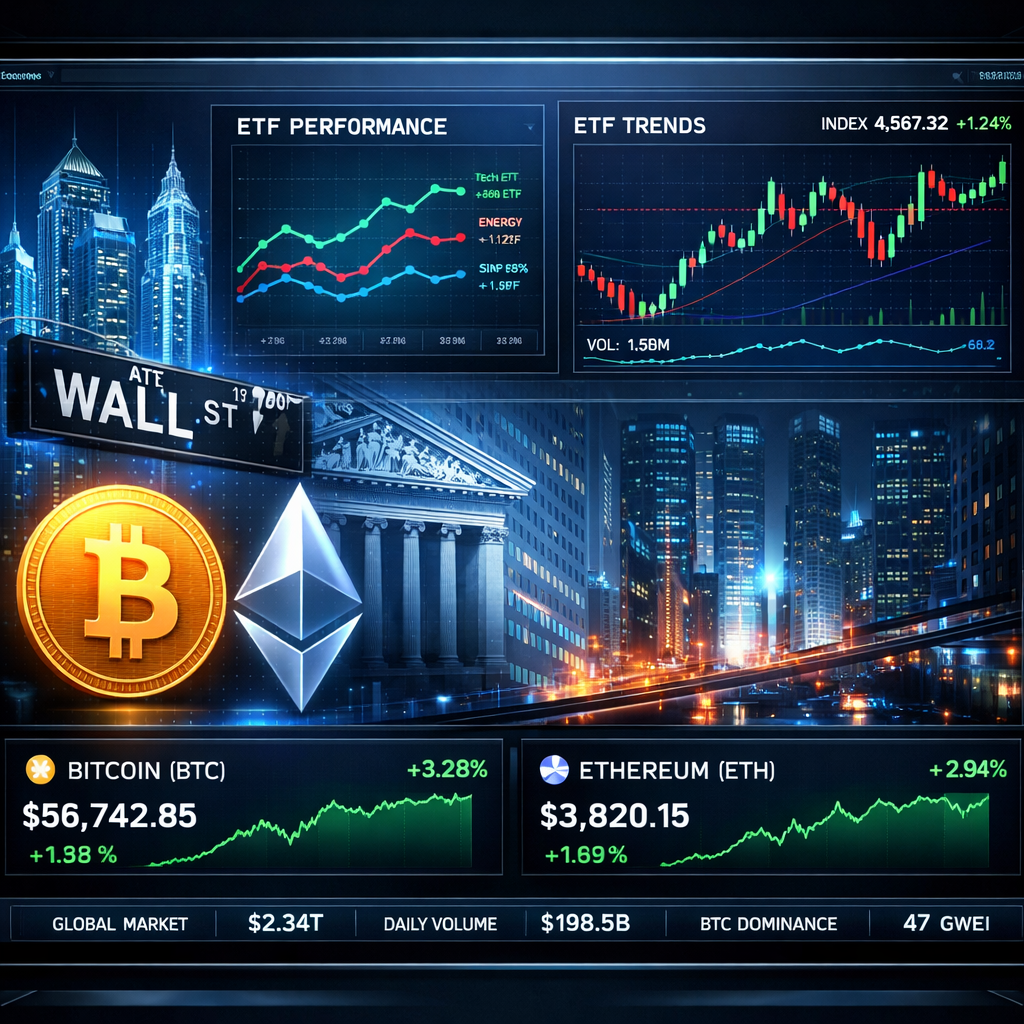

ETFs remain a powerful tool for building wealth, but navigating today’s volatile markets—especially with crypto integration—is more complex than ever. Let’s demystify it.
Understanding the Current ETF Landscape
Exchange-Traded Funds (ETFs) have gained immense popularity for their simplicity, diversity, and cost-efficiency. As we step into 2026, ETF investors face a blend of traditional market headwinds and emerging opportunities—especially in crypto integration and tokenized assets.
Recent headlines show Bitcoin entering the Federal Reserve’s 2026 stress tests and Ethereum being positioned as a key infrastructure layer for asset tokenization by BlackRock. These developments are reshaping how ETFs are built and what they represent.
Why ETFs Still Work—Even in Unstable Markets
Despite liquidity challenges, like the recent $1.5B Bitcoin ETF outflow (source), ETFs still offer three main advantages:
- Diversification: Investors can gain exposure to hundreds of securities in a single fund.
- Liquidity: Most ETFs trade like stocks, providing real-time pricing and easy entry/exit.
- Low Fees: With expense ratios often under 0.10%, ETFs beat actively managed funds in cost-efficiency.
Types of ETF Strategies for 2026
In today’s macroeconomic and geopolitical environment, consider diversifying your ETF strategy into the following categories:
1. Core Index ETFs
Start with a foundation of index-based ETFs like:
- VOO – Vanguard S&P 500 ETF
- IXUS – iShares Core MSCI Total International Stock ETF
- AGG – iShares Core U.S. Aggregate Bond ETF
These provide exposure to U.S. equities, global markets, and bonds. Allocate based on your risk tolerance.
2. Sector and Thematic ETFs
Capitalize on trends like clean energy, AI, or blockchain through thematic ETFs:
Pro tip: Limit thematic ETFs to 10–15% of your portfolio due to their volatility.
3. Crypto-Linked ETFs
With increased attention from institutional players, crypto ETFs are gaining traction. While volatile, they offer exposure without direct wallet management. Examples include:
- BITO – ProShares Bitcoin Strategy ETF
- ETHE – Grayscale Ethereum Trust (if converted)
Note: Monitor ETF flows and liquidity. The recent outflows show investor sentiment can shift quickly.
How to Build an Actionable ETF Portfolio in 2026
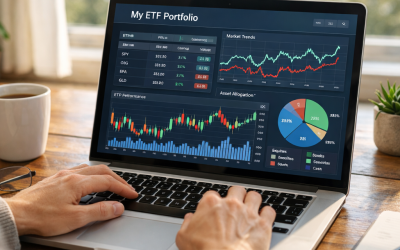
Your investment plan should reflect your goals, timeline, and risk appetite. Here’s a sample ETF allocation for a moderately aggressive investor:
| Category | ETF | Allocation |
|---|---|---|
| Core US Equity | VOO | 35% |
| International Equity | IXUS | 20% |
| Fixed Income | AGG | 15% |
| Thematic (AI/Blockchain) | BKCH / BOTZ | 15% |
| Crypto Exposure | BITO | 5% |
| Cash or Short-Term Bonds | SHV | 10% |
This portfolio blends core stability with exposure to future-forward tech and finance sectors.
Risk Management in Volatile Environments
To weather market turbulence, stick to these principles:
- Rebalancing: Check your asset mix quarterly and realign to target allocations.
- Stop Loss Orders: Set loss triggers on volatile ETFs to manage downside risk.
- Keep Cash: Maintain 5–10% liquidity to buy during downturns.
- Use Dollar-Cost Averaging: Invest fixed amounts monthly to reduce entry-point risk.
Use tools like PortfolioVisualizer to simulate risk/reward scenarios.
How Crypto Trends Are Shaping ETF Investing
Institutional integration of crypto is reshaping ETF strategy:
- The Fed’s inclusion of Bitcoin in stress tests raises concern over crypto’s systemic impact.
- Ethereum’s infrastructure dominance opens doors for tokenized ETF products.
- Bitwise’s analysis suggests the crypto market may have bottomed, mirroring 2023’s rally setup.
CTA #1: Explore Fidelity’s ETF screener to find funds aligning with your investment goals.
Tax Optimization Tips for ETF Investors
ETFs are already tax-efficient due to their structure, but you can go further:
- Harvest Tax Losses: Sell losing positions to offset gains elsewhere.
- Use Tax-Advantaged Accounts: Prioritize ETFs in IRAs or HSAs to shield gains.
- Dividend Reinvestment: Choose DRIP options to compound returns without taxable distributions.
Consider platforms like Morningstar or Empower to track and optimize your portfolio performance.
Conclusion: Stay the Course, Stay Informed
ETFs remain a cornerstone of smart investing, even as markets undergo seismic shifts. Integrating crypto cautiously, rebalancing regularly, and staying diversified will help you navigate the uncertainty of 2026.
CTA #2: Start building your ETF investing plan with the Bogleheads guide.
Want personalized guidance? Consider a certified financial advisor to tailor an ETF strategy for your goals.


0 Comments