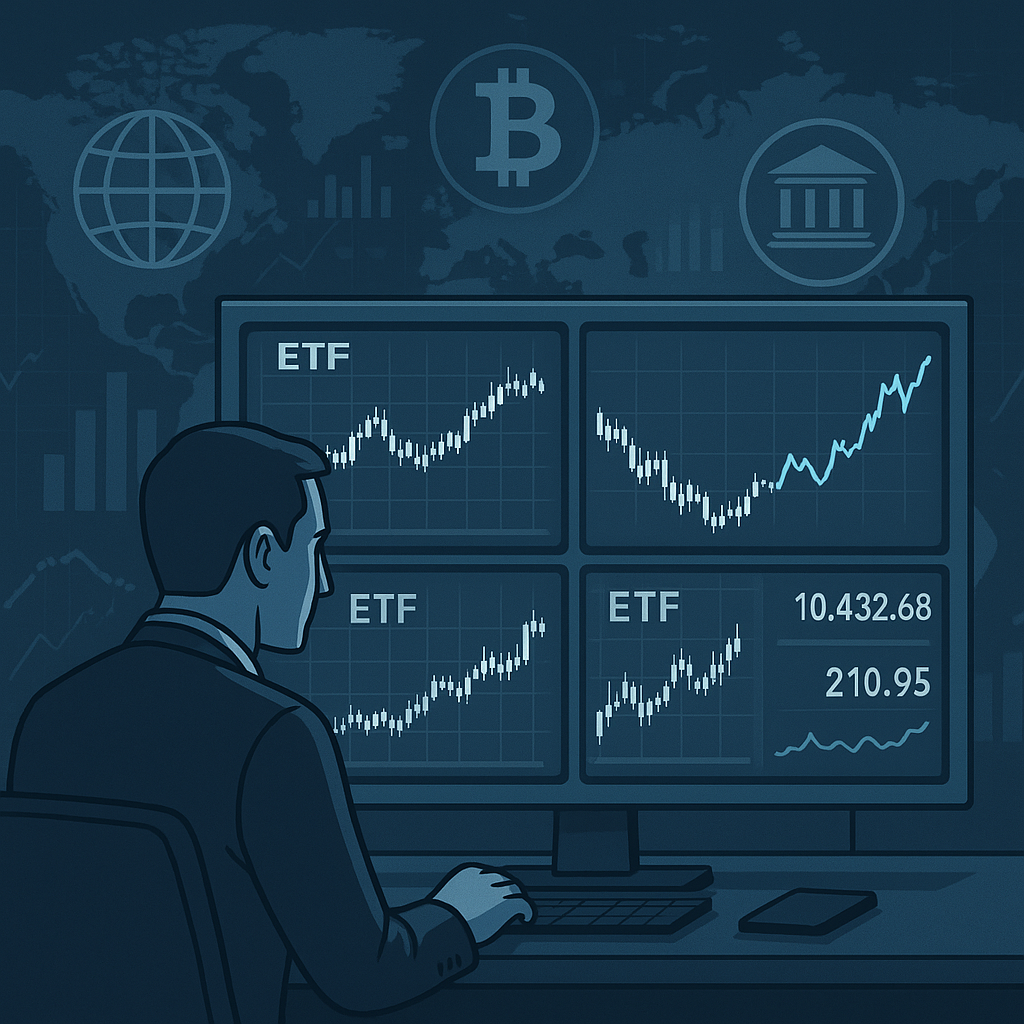

With the Federal Reserve’s next move looming and crypto markets flashing signs of volatility, investors need resilient strategies. Learn how ETFs can offer diversification, risk management, and opportunity in uncertain times.
Understanding the Current Market Climate
As we step into a Fed-focused week, global markets remain cautiously optimistic. Asian equities and crypto assets inched higher on Monday, signaling that investors are holding their positions while awaiting the Federal Reserve’s upcoming interest rate decision on December 10, 2025.
With a 92% probability priced in for a 25-basis-point rate cut, many are speculating that this could be the beginning of a dovish shift in monetary policy. If true, this could spark renewed interest in risk assets such as equities and crypto, making now a critical time to revisit your investment strategy — especially using Exchange-Traded Funds (ETFs).
What Makes ETFs a Smart Investment in Volatile Times?
ETFs offer investors a unique combination of diversification, liquidity, low fees, and transparency. Whether navigating inflation, rate changes, or geopolitical risks, ETFs can help create a balanced portfolio that withstands market fluctuations.
Key benefits of ETFs:
- Diversification: One ETF can hold hundreds of securities across industries or countries.
- Low Costs: Most ETFs have lower expense ratios than mutual funds.
- Liquidity: ETFs trade like stocks, letting you buy and sell during market hours.
- Tax Efficiency: ETFs tend to be more tax-efficient due to their “in-kind” redemption process.
Top ETF Strategies for 2025
Given the macroeconomic backdrop — including potential Fed rate cuts, regulatory shifts like Binance’s regulatory successes in the UAE, and lingering volatility in crypto markets — here are actionable ETF strategies to consider:
1. Core-Satellite Approach
Build a “core” portfolio with broad-market ETFs like:
- SPY – S&P 500 ETF
- VT – Vanguard Total World Stock ETF
- BND – Vanguard Total Bond Market ETF
Then, layer in “satellite” positions focused on thematic or sector-specific opportunities:
- ARKK – ARK Innovation ETF (focused on disruptive tech)
- GLD – SPDR Gold Shares (inflation hedge)
- BITO – ProShares Bitcoin Strategy ETF (crypto exposure)
This approach allows you to maintain portfolio stability while pursuing upside in emerging areas.
2. Defensive Sector Rotation
If markets remain choppy or the Fed delays cuts, defensive sectors typically outperform. Consider sector ETFs like:
- XLV – Health Care Select Sector SPDR Fund
- XLU – Utilities Select Sector SPDR Fund
- XLP – Consumer Staples Select Sector SPDR Fund
Example: During previous rate cut cycles, utilities and healthcare often outperformed the broader market due to stable earnings and dividends.
3. Dividend-Focused ETFs
With yields still attractive and equity markets uncertain, dividend ETFs can provide income and reduce volatility.
- VYM – Vanguard High Dividend Yield ETF
- SCHD – Schwab U.S. Dividend Equity ETF
Tip: Look for ETFs with a long history of increasing dividends and low turnover to minimize tax impacts.
How to Choose the Right ETF
Before investing in any ETF, consider the following:
- Expense Ratio: Lower is generally better.
- Holdings: Review the top assets the ETF is invested in.
- Liquidity: Check average daily trading volume.
- Performance History: Past performance isn’t a guarantee, but it offers insights.
Morningstar’s ETF Screener is a great tool to begin your research.
Integrating ETFs into Your Personal Finance Plan
ETFs are not just for traders or wealth managers — they can be a powerful tool in your personal finance strategy. Here’s how:
- Retirement Accounts: Use ETFs in IRAs or 401(k)s for long-term growth.
- Emergency Funds: Consider ultra-short bond ETFs for better returns than savings accounts.
- Dollar-Cost Averaging: Invest a set amount monthly to smooth out market volatility.
Bonus Tip: Use a platform like Fidelity or Vanguard to automate ETF purchases and minimize fees.
Potential Risks to Watch
Even the best ETFs carry risks, especially in today’s evolving environment:
- Interest Rate Risk: Fixed income ETFs may lose value if rates rise unexpectedly.
- Market Liquidity: In times of stress, even ETFs can suffer from wide bid-ask spreads.
- Hidden Fees: Some thematic ETFs have higher internal costs or suffer from low volume.
Always read the ETF prospectus and assess your risk tolerance before investing.
📈 Ready to Build a Smarter Portfolio?
Whether you’re a beginner or a seasoned investor, ETFs offer a flexible and efficient way to navigate uncertain markets.
💡 CTA #1: Download Our Free ETF Starter Guide
Click here to get a free PDF that breaks down the top 10 ETFs for 2025 and how to use them in your portfolio.
🛠️ CTA #2: Try Our Interactive ETF Portfolio Builder
Build your ETF portfolio based on your goals, risk profile, and investment timeline — no email required.
Conclusion
As markets brace for central bank decisions and crypto volatility, ETFs remain a powerful tool for investors seeking both growth and protection. By using smart strategies like core-satellite allocation, defensive sector rotation, and dividend focus, you can position yourself for long-term success — no matter what 2025 brings.
Don’t just react to the market. Build a strategy that works through it.


0 Comments