


Markets are volatile, headlines are scary, and prices are falling — but for smart crypto traders, this is opportunity knocking. Learn how to read the charts, understand market signals, and use technical indicators to make better trading decisions today.
Understanding the Current Market Conditions
On January 21, 2026, the crypto market experienced a 2.4% decline, with 92 of the top 100 cryptocurrencies posting losses and a total market cap of $3.1 trillion. According to CryptoNews, uncertainty fueled by macroeconomics and profit-taking behavior is causing downward pressure on prices.
But while many traders panic sell, experienced investors recognize that technical analysis (TA) can provide clarity amid the chaos.
Why Technical Analysis Matters in Crypto
Unlike traditional markets, crypto trades 24/7, is heavily sentiment-driven, and lacks centralized earnings reports. That makes technical analysis one of the most powerful tools in your trading arsenal. TA helps you:
- Identify trends and momentum
- Time entry and exit points
- Spot reversal or continuation patterns
- Make objective decisions in emotional markets
How to Read a Crypto Chart Like a Pro
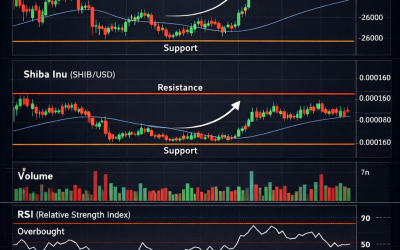
Start with a candlestick chart, which shows price movement over time. Each candle includes:
- Open: Price at the start of the time period
- Close: Price at the end of the time period
- High & Low: Price extremes during the period
Green candles indicate upward price movement; red candles show downward movement.
Recommended Platforms:
- TradingView – For free charting and TA tools
- Nansen – New AI-powered agentic trading tools
Top 5 Actionable Technical Strategies for Crypto Traders
1. Support and Resistance Levels
These are psychological zones where prices tend to bounce or reverse. Use horizontal lines to mark:
- Support: Recent lows where buyers step in
- Resistance: Recent highs where sellers emerge
🔍 Pro Tip: Combine support/resistance with volume spikes to validate strength.
2. Moving Averages (MAs)
Use Simple Moving Averages (SMA) and Exponential Moving Averages (EMA) to smooth out price action and identify trends.
- 50 EMA and 200 EMA crossovers are classic trend signals.
Golden Cross: 50 EMA crosses above 200 EMA (bullish)
Death Cross: 50 EMA crosses below 200 EMA (bearish)
3. Relative Strength Index (RSI)
RSI measures momentum. It oscillates between 0 and 100:
- Above 70 = Overbought (potential reversal or pullback)
- Below 30 = Oversold (potential bounce)
Combine RSI with chart patterns for more accurate signals.
4. Fibonacci Retracement
Fibonacci levels pinpoint where a correction could stall and reverse. Most used levels: 0.382, 0.5, and 0.618.
Use it after a strong price move to plan entries or stop-loss levels.
5. MACD (Moving Average Convergence Divergence)
MACD is a powerful momentum indicator. It consists of:
- MACD line
- Signal line
- Histogram
Bullish signal: MACD line crosses above Signal line
Bearish signal: MACD line crosses below Signal line
How AI and Regulation Are Changing the Game
According to Nansen, AI trading tools are now integrating with platforms like Base and Solana to offer real-time on-chain signals and execution automation — a shift known as agentic trading.
Meanwhile, regions like Vietnam and Hong Kong are pushing forward with licensing frameworks that may enhance market stability and trust.
Creating a Simple Trading Plan (Template Included)
Every trader needs a plan. Here’s a quick template you can copy:
- Asset: (e.g., BTC/USDT)
- Entry: (e.g., Support bounce at $38,000)
- Exit: (e.g., Resistance near $41,000)
- Stop Loss: (e.g., Close below $37,000)
- Indicators Used: RSI, 50 EMA, Fibonacci
Want to make this process automatic? Test out Nansen’s new AI tools and let the software scan on-chain data for opportunity signals while you sleep.
Reading Between the Headlines
When headlines like “Crypto Down Today” shake the markets, your job as a trader is to zoom out and look at structure, not noise. Remember:
- Corrections are normal in bull runs
- Use tools, not emotions, to trade
- Always manage risk and never overleverage
The next time fear takes over the market, let your trading setup — not your feelings — guide your decisions.
Conclusion: From Chart Reader to Strategic Trader
Mastering technical analysis isn’t about predicting the future — it’s about stacking probabilities in your favor.
Start small, stay consistent, and review your trades. The more charts you analyze, the sharper your edge becomes.
If you’re ready to take your crypto strategy to the next level, open a free TradingView account here and begin charting with live indicators today.
Don’t just HODL — trade with a plan.



0 Comments