
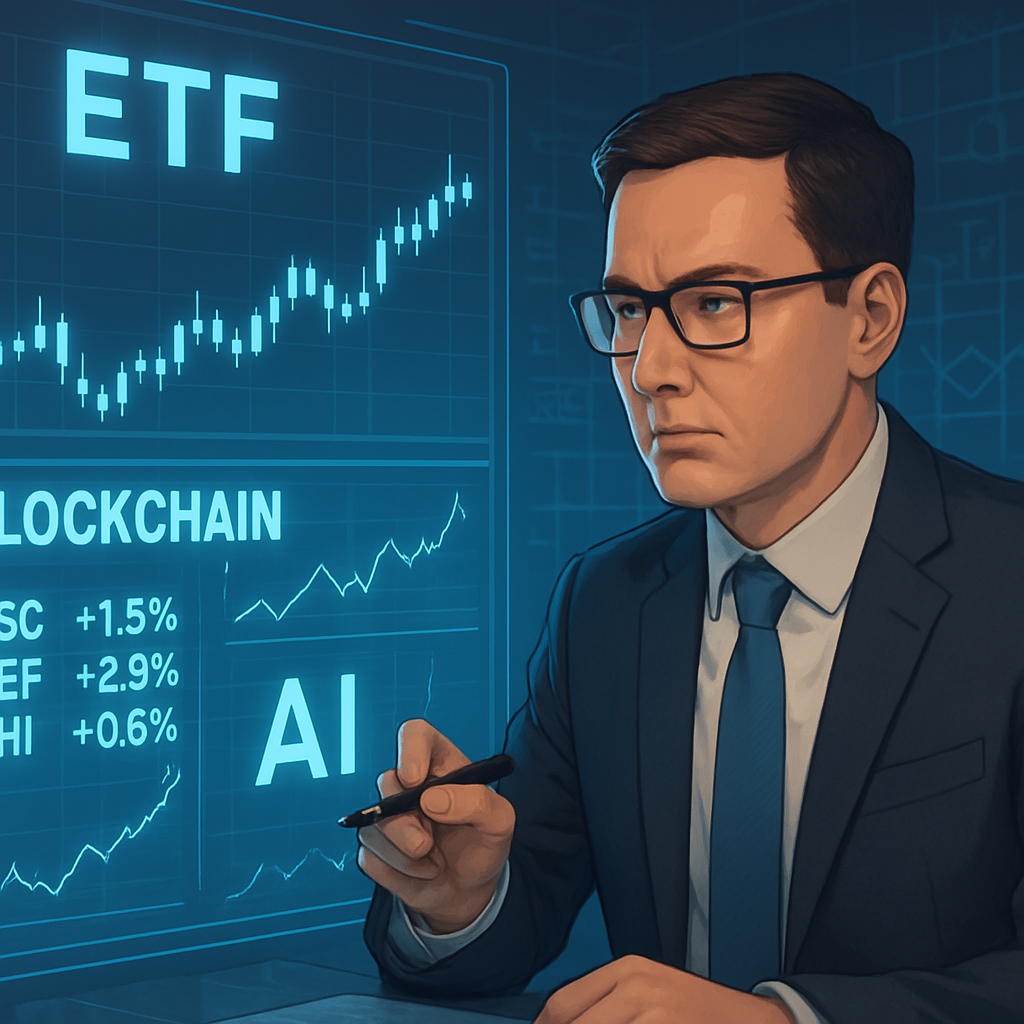

ETFs have revolutionized how everyday investors build wealth—if you know how to use them strategically.
Understanding ETFs: What Makes Them So Powerful?
Exchange-Traded Funds (ETFs) combine the diversification of mutual funds with the flexibility of individual stocks. They allow investors to gain exposure to entire sectors, regions, or themes—like blockchain technology or the S&P 500—without buying each asset individually.
In 2025 alone, firms like Bitwise filed 11 new crypto ETF proposals, signaling massive institutional appetite. So, how can retail investors align their ETF strategies with these trends?
Why ETFs Belong in Your Personal Finance Toolkit
- Diversification: Own hundreds of stocks with a single trade.
- Low Fees: ETFs often have lower expense ratios than mutual funds.
- Liquidity: Buy and sell anytime during market hours.
- Transparency: Holdings are disclosed daily in most cases.
Core ETF Strategies for Long-Term Success
Whether you’re a beginner or a seasoned investor, these proven approaches help you build wealth steadily:
1. Buy-and-Hold with Broad Market ETFs
Use low-cost ETFs that track major indexes like the S&P 500 (such as Vanguard’s VOO or iShares IVV). These are ideal for long-term, hands-off investing.
Example: If you had invested $10,000 in SPY (S&P 500 ETF) in 2010, it would be worth over $47,000 by the end of 2025—even after market pullbacks.
2. Thematic Investing: Ride Megatrends
Capture growth in sectors like AI, robotics, and blockchain. For instance:
With global AI spending hitting $1.5 trillion in 2025, as per Cryptoslate’s robotics piece, these ETFs offer strategic exposure.
3. Dollar-Cost Averaging (DCA)
Instead of timing the market, invest a set amount regularly. This reduces the impact of volatility and removes emotional decision-making from the process.
Tool Tip: Use platforms like Fidelity or Vanguard to automate your ETF contributions.
4. Income-Focused ETFs
Looking for cash flow? Explore dividend ETFs like:
These pay quarterly dividends and are great for retirees or conservative portfolios.
How to Evaluate an ETF Before You Invest
Not all ETFs are created equal. Here’s a checklist:
- Expense Ratio: Aim for under 0.20% for core holdings.
- Assets Under Management (AUM): Look for funds with over $500 million for liquidity.
- Tracking Error: The closer the ETF mirrors its index, the better.
- Holdings: Review the top 10 assets and sector spread.
Pro Tip: Use Morningstar to compare ETF performance and metrics.
Sector Spotlight: Why Blockchain ETFs Are Heating Up
After a turbulent 2025, highlighted by both breakthrough innovations and major industry collapses (CryptoSlate’s top losers list), investors are seeking diversified exposure to digital assets.
This has led to a surge in crypto-related ETF filings—like Bitwise’s 11 ETF blitz. Expect increased adoption and regulation to make these funds mainstream by 2030, especially as nations like Pakistan embrace crypto leadership.
Common ETF Investing Mistakes to Avoid
- Overconcentration: Don’t buy multiple ETFs that track the same index.
- Chasing Hype: Avoid newly launched thematic ETFs without proven track records.
- Ignoring Fees: High-fee ETFs eat into your returns over time.
CTA #1: Ready to start? Open an ETF portfolio with SoFi Invest—no commissions, no minimums.
Tax Efficiency and ETFs: What You Should Know
ETFs are structured to limit taxable capital gains through in-kind redemptions. For long-term investors, this can be a huge advantage, especially in taxable brokerage accounts.
Strategy: Hold income-generating ETFs in tax-advantaged accounts (IRAs) and growth ETFs in taxable accounts for tax-loss harvesting opportunities.
How to Build a Balanced ETF Portfolio (Sample Allocation)
Moderate Risk Profile:
- 40% – Broad U.S. Market (e.g., VTI)
- 20% – International Developed Markets (e.g., VXUS)
- 10% – Emerging Markets (e.g., IEMG)
- 10% – Thematic Sector (e.g., BOTZ)
- 10% – Dividend Yield (e.g., VYM)
- 10% – Bonds (e.g., BND)
This diversified mix can weather different economic cycles and provide growth plus income.
CTA #2: Want a custom ETF strategy? Try Betterment or Wealthfront for automated, tax-optimized portfolios.
Final Thoughts
ETFs are more than just a trend—they are the building blocks of modern investing. With the right strategy, they offer simplicity, growth, and stability. As the financial world leans toward digital assets, thematic and blockchain ETFs are set to play a crucial role in future portfolios.
Stay informed, stay diversified, and invest with intention.


0 Comments