


Are you tired of chasing pumps and falling for crypto hype? Learn how to use technical analysis to trade like a pro—even in unpredictable markets like Bitcoin, XRP, or Plasma.
Why Technical Analysis Matters in Crypto Trading
With the return of regulatory heavyweights like Amir Zaidi to the CFTC and increasing institutional interest in assets like XRP, technical analysis (TA) has become more important than ever in 2026. Regardless of news cycles or hype, TA equips traders with objective tools to identify profitable entry and exit points.
Whether you’re watching Plasma’s 15% rally or bracing for Mantle’s 8% weekly drop, using charts makes you a proactive—not reactive—trader.
Step 1: Understand the Basics of Technical Analysis
- Price Action: Focuses on historical price movements without relying solely on indicators.
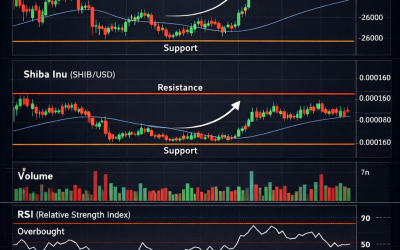
- Support and Resistance: Levels where price historically bounces or rejects.
- Volume: Confirms strength behind price moves.
- Indicators: Tools like RSI, MACD, and Bollinger Bands that help identify momentum, trends, and volatility.
Want a deeper understanding of chart basics? Check out this guide to reading charts.
Step 2: Choosing the Right Charting Tools
Most traders use TradingView due to its user-friendly interface and wide range of indicators. Set your chart to a 4-hour or daily timeframe for swing trading, or the 15-minute for scalping.
Pro Tip: Stick to 2–3 indicators max to avoid analysis paralysis.
Step 3: Learn to Read Candlesticks
Candlestick patterns give insights into buyer and seller psychology. Mastering these can dramatically improve your timing. Start with these basics:
- Doji: Signals indecision, often before a reversal.
- Hammer: Bullish reversal signal after a downtrend.
- Shooting Star: Bearish reversal after an uptrend.
Learn more about candlestick patterns in this comprehensive visual guide.
Step 4: Key Indicators You Should Know
Relative Strength Index (RSI)
An RSI above 70 usually signals that an asset is overbought, while under 30 suggests it’s oversold. For instance, if XRP nears the $3 range and RSI hits 75, watch for a pullback.
Moving Averages
The 50-day and 200-day moving averages help you track long-term trends. A Golden Cross (50 MA crossing above 200 MA) is bullish, while a Death Cross is bearish.
Bollinger Bands
These bands expand and contract based on volatility. When price touches the upper band, it may be overbought—and vice versa.
MACD (Moving Average Convergence Divergence)
Used to identify momentum. A bullish crossover (MACD line crossing above signal line) may indicate a good entry point.
Step 5: Build Your Trading Strategy
Here’s a simple swing trading strategy using TA:
- Scan for coins with a strong narrative (e.g., XRP, Plasma).
- Set up your chart on TradingView with RSI, MACD, and 50/200 MAs.
- Look for trend confirmation using moving averages.
- Confirm momentum with MACD crossovers.
- Use RSI to avoid buying tops or selling bottoms.
- Set your stop-loss 3–5% below key support.
Example: Plasma (XPL) surged 15% recently. If RSI is still under 70 and MACD just crossed bullish, that could be a signal for a continuation trade.
How to Manage Risk Like a Pro
Risk management is non-negotiable. Use the 1% rule: Never risk more than 1% of your trading capital on a single trade.
For example, if you have $5,000 in your account, your risk per trade should be $50. Use calculated position sizing and stop-loss orders to enforce discipline.
Spotting Crypto Scams with Technical Clues
Scams are rampant, as seen in the recent $1.3M crypto romance scam. Legitimate projects show consistent volume and price behavior. Avoid coins with:
- Sudden, unexplained volume spikes
- No clear trend or overly manipulated charts
- Lack of price history or suspicious social media hype
Stay safe: Always check for unusual chart patterns and research project fundamentals.
When Fundamentals Meet Technicals
Big moves often happen when technical setups align with fundamental news. For example, XRP’s potential $3 breakout forecasted by Franklin Templeton could be supported by bullish TA.
Take Action: Combine technical entries with catalysts like partnerships, upgrades, or regulatory clarity.
Set Up a Trading Routine
Discipline is key. Create a daily or weekly routine:
- Start your day with market sentiment analysis.
- Scan charts using set indicators and timeframes.
- Journal your trades and review performance weekly.
Need help building a crypto trading plan? Download our free Crypto Trading Plan Template.
Final Thoughts: Practice Makes Profitable
Technical analysis won’t make you rich overnight, but it gives you a solid foundation for making rational decisions in volatile markets. By practicing with historical charts and using demo accounts, you’ll refine your strategy over time.
Don’t just watch the charts—understand them. And when the market moves, you’ll know exactly what to do.
Ready to level up your trading strategy? Subscribe to our weekly newsletter for more actionable TA setups and market insights.



0 Comments