


With Bitcoin flirting around the $90,000 mark and market sentiment swinging wildly from greed to fear, mastering technical analysis has never been more crucial. Learn how to decode charts and spot real opportunities amidst the chaos.
Understanding Why Technical Analysis Matters Right Now
In volatile times like these—when macro news causes rapid price shifts and whales absorb the entire daily supply of Bitcoin—it’s vital to rely not just on market sentiment, but on technical signals that guide consistent trading decisions.
The crypto market recently saw a 1.5% uptick, pushing total market capitalization to $3.13 trillion (source). But with the Fear & Greed Index plunging into extreme fear territory (source), how do you identify real buy or sell signals?
1. Key Tools in Your Technical Analysis Toolkit
Let’s start with the essentials. Here are the most important tools you’ll need:
- Moving Averages (MA): Track the trend direction using the 50-day and 200-day MAs.
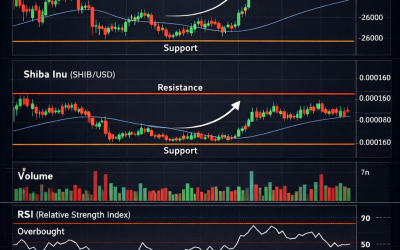
- Relative Strength Index (RSI): A momentum oscillator that helps determine overbought/oversold levels.
- Bollinger Bands: Gauge volatility and breakout potential.
- Volume: Confirm whether a price move is backed by market participation.
- Support and Resistance Levels: Identify key price zones for potential entry or exit points.
2. Reading Candlestick Charts Like a Pro
Candlestick patterns reveal the psychology behind price action. Here are three important ones to master:
- Doji: Indicates indecision—use it to anticipate breakouts.
- Hammer: Signals potential reversals after a downtrend.
- Engulfing Patterns: Strong reversal signals when the second candle ‘engulfs’ the first.
Tip: Combine candlestick signals with volume confirmation to avoid false signals.
3. Strategy: 3-Step RSI + MA Entry System
This strategy works well in trending markets like Bitcoin’s current bounce off $87,300 back toward $90,000:
- Use RSI: Wait for RSI to drop below 30 (oversold) or rise above 70 (overbought).
- Confirm with Moving Averages: Check if price is above 50-MA in an uptrend or below it in a downtrend.
- Entry/Exit: Buy when RSI < 30 + price crosses above 50-MA. Sell when RSI > 70 + price drops below 50-MA.
Why it works: This combines momentum (RSI) with trend confirmation (MA), reducing whipsaw risk.
4. Understanding Market Context: Macro + Whale Activity
Technical analysis doesn’t operate in a vacuum. For example:
- Macro News: The recent U.S. tariff deal improved risk appetite—see how Bitcoin mirrored this in its recovery to $90,000 (read more).
- Whale Behavior: Major buyers like Adam Back absorbing new supply can signal bullish accumulation (source).
Always align your chart signals with these bigger-picture forces.
5. Chart Breakdown: Bitcoin at $90,000 Resistance
Let’s analyze a key level. BTC is consolidating near $90,000, facing clear resistance. Here’s how to approach it:
- Plot horizontal resistance at $90K.
- Use Bollinger Bands to spot squeeze or breakout.
- Watch for volume spike + RSI breakout to confirm bullish move.
If price breaks above $90K with volume, it could trigger a run toward $95K to $100K. If rejected, expect a retest of $87K support.
6. Strategy: Breakout or Breakdown Play
This approach works well during key resistance battles like the $90K zone:
- Set alerts slightly above resistance (e.g. $90,300) and below support ($86,500).
- Use a 4-hour chart to confirm breakout with 2+ candles closing above resistance or below support.
- Enter with tight stop-loss just outside the opposite end.
Pro Tip: Combine with the Fear & Greed Index to assess crowd psychology (check it here).
7. CTA: Turn Knowledge Into Action
Want real-time trading signals and chart setups? Create a free TradingView account and start applying these strategies live. You’ll gain access to indicators, drawing tools, and alerts that keep you one step ahead.
8. Bonus: How to Analyze Altcoin Trends Using Bitcoin
Altcoins often follow Bitcoin’s lead. If BTC is ranging or rallying, high-beta coins like Ripple (now boosted by Binance listing RLUSD) may offer larger percentage moves (learn more).
Use BTC’s trend to time altcoin entries, and manage risk with stop-loss orders just below local support zones.
9. Risk Management Tips for 2026’s Volatility
- Use 2% rule: Never risk more than 2% of capital on a single trade.
- Employ trailing stop-losses to secure profits in fast moves.
- Journal every trade: track setups, outcome and lessons learned.
10. CTA: Practice Before You Trade Real Capital
Want to sharpen your skills? Try Binance Futures Testnet or Bybit Testnet to simulate trades without risking real money. This is the best way to build confidence and validate your strategy before going live.
Final Thoughts: Marrying Technicals With Context
As we’ve seen from the January 2026 events, price action doesn’t lie—but interpreting it correctly requires balance between chart analysis and real-world news. Technical tools give you the edge. Used together with sentiment and macro events, they can help you trade with clarity and consistency.
Keep your strategies simple, your risk low, and your edge sharp.
Happy Trading!



0 Comments