
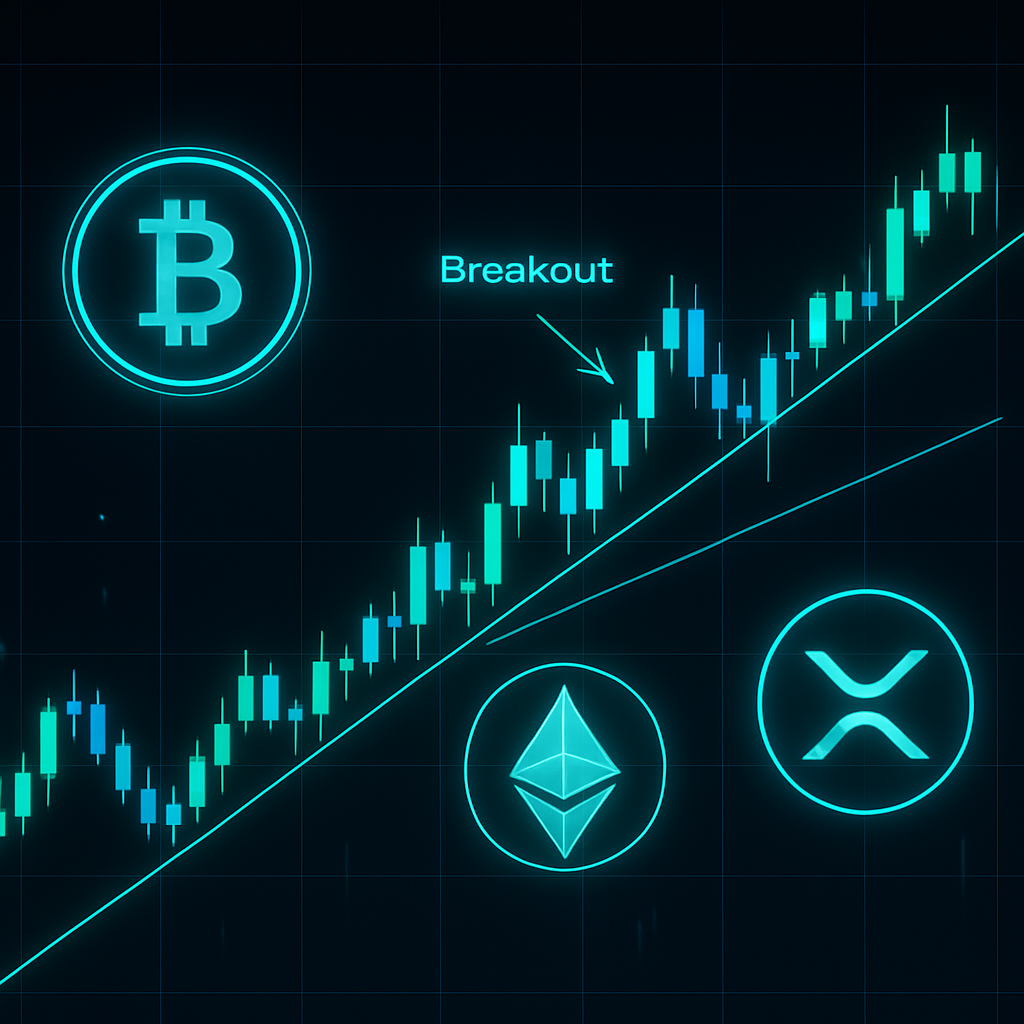

Are you frustrated with sideways markets and fake breakouts? Learn how to read crypto charts like a pro and build real trading strategies that work — even in uncertain conditions.
Understanding the Current Market Landscape
The crypto market is evolving fast. With XRP trading around $1.87 and Ethereum showing mixed signals due to staking congestion, traders need more than just hype to win. The key is technical analysis — reading price charts and interpreting market behavior before others do.
Section 1: How to Read a Crypto Chart
Let’s strip it back to basics. Most traders rely on candlestick charts. Each candle represents price movement over a time frame: open, high, low, and close (OHLC).
- Green candles show price closing higher than it opened — bullish
- Red candles indicate price closed lower — bearish
- The wicks show the highest and lowest price reached during that period
Use TradingView or CoinGecko to practice reading charts live.
Section 2: Support & Resistance — Your First Signal
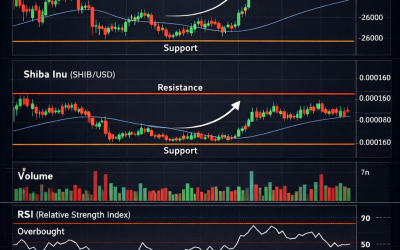
Support is a price level where demand prevents price from falling lower. Resistance is the opposite — it prevents price from moving up. For example, XRP’s current resistance at $2.10 is a level where many sellers are likely to take profit.
When price breaks through resistance with volume, that’s your first breakout signal. As seen in the XRP chart, price is consolidating just below this level — a breakout could be imminent.
Section 3: Trendlines and Breakouts
A trendline connects a series of highs (in a downtrend) or lows (in an uptrend). When the price breaks above or below a well-established trendline, it often signals a significant move.
Tip: Use the daily chart to draw trendlines with at least three touchpoints. The clearer the trendline, the more actionable the breakout.
Section 4: Indicators That Matter (and Those That Don’t)
Indicators like the Relative Strength Index (RSI) and Moving Averages help confirm chart patterns. Here’s what to focus on:
- RSI (14): Above 70 = overbought, below 30 = oversold
- 50/200 EMA Cross: A golden cross (50EMA > 200EMA) signals long-term bullishness
- Bollinger Bands: Watch for squeeze scenarios — they often precede volatility
Ignore: Too many indicators. Stick to 2-3 that you understand well.
Section 5: XRP, ETH, BTC — Breakout or Fakeout?
Let’s apply what we’ve learned to real scenarios:
🔹 XRP
Currently consolidating just below $2.10 resistance. Use a breakout strategy — wait for a daily close above $2.10 with volume.
Strategy: Enter long after confirmation, stop-loss at $1.85, target $2.30–$2.50.
🔹 Ethereum
ETH’s staking congestion creates false bullish signals. One corporate giant is distorting validator activity. Read more here.
Strategy: Avoid breakout buys for now. Focus on mean reversion trades around $2,300–$2,600.
🔹 Bitcoin
BTC has a 70% chance of a massive 2026 breakout — but only if current volume trends continue, according to this BTC forecast.
Strategy: Scale in using DCA (Dollar Cost Averaging), and add more aggressively if price breaks above $55k with volume.
Section 6: Risk Management Isn’t Optional
Even the best chart won’t save you from poor risk management. Always:
- Use a stop-loss — ideally 2–5% below your entry
- Risk only 1–2% of your total capital per trade
- Journal every trade: entry, exit, reason, outcome
Pro Tip: Use TradingView to backtest your strategy before using real money.
Section 7: How Regulation Shapes Your Strategy
2025 was a turning point in crypto regulation. According to this report, the focus shifted from courtroom drama to real infrastructure enforcement.
For traders, this means:
- Stricter KYC/AML rules in centralized exchanges
- Taxation triggers based on block time — see the rise of Universal Bitcoin Time
- More clarity on staking rewards and DeFi reporting
Action Step: Consult a crypto-friendly tax advisor before 2026 begins.
Section 8: Build a Strategy and Stick to It
You don’t need a new strategy for every coin. Pick one that fits your time and risk tolerance:
- Trend Breakout: Ideal for swing traders
- Range Trading: Works well in sideways markets like XRP right now
- Scalping: Requires discipline and real-time focus
Want real-time trade ideas? Join our free Telegram channel for chart alerts and macro insights.
Section 9: Tools Every Trader Must Use
Don’t trade blind. Equip yourself with these tools:
- TradingView — charting and indicators
- Coinglass — liquidations and funding rate tracking
- CoinMarketCal — upcoming events and catalysts
Bonus: Use Curvo to model your strategy before going live.
Final Thoughts: Ready for 2026?
Whether you’re trading XRP breakouts, analyzing Ethereum validator tricks, or scaling into BTC for a potential 2026 surge — your edge lies in reading charts and sticking to your system.
Don’t chase pumps. Trade with clarity and confidence.
Want a PDF Guide of These Strategies? Download our free ‘Crypto Trading Blueprint 2026’ and level up your technical skillset today.



0 Comments