


Timing matters in crypto. Whether you’re eyeing altcoins, Bitcoin, or meme tokens like SHIB and PEPE — knowing when and how to enter can be the difference between profit and panic. Learn how to read key chart signals and combine them with Dollar Cost Averaging (DCA) to build a strategy that stands strong even in volatile markets.
Why December Could Be Your Best Entry Point for Altcoins
If you’ve been waiting to start your crypto journey or to accumulate your favorite altcoins, December might be your golden window. Historically, year-end months often bring a mix of low prices and reduced hype — ideal conditions for Dollar-Cost Averaging (DCA).
DCA is a strategy where you invest a fixed amount into an asset at regular intervals, regardless of the price. Over time, this reduces the impact of market volatility and avoids trying to time the perfect bottom.
Here’s why December 2025 makes sense:
- Altcoin prices remain suppressed post-correction
- Sentiment is neutral-to-bearish — a fertile ground for accumulation
- Historical data shows Q4 often precedes new bull trends
- Development updates on meme coins (like SHIB and PEPE) are creating anticipation for 2026
Reading Chart Signals Like a Pro (Even If You’re a Beginner)
Technical analysis doesn’t require a PhD. Start with these simple but powerful indicators:
1. Bollinger Bands
Bollinger Bands help identify volatility and potential price reversals. When the price touches the lower band, it could be oversold — a potential entry point. When it touches the upper band, it may be overbought.
In the case of PEPE Coin, analysts noted a tightening of these bands, which often signals an incoming breakout.
2. RSI (Relative Strength Index)
RSI measures momentum. Values:
- Below 30: Oversold (potential buy)
- Above 70: Overbought (potential sell)
Use RSI with Bollinger Bands for confirmation. If both signal a bounce, it’s stronger evidence.
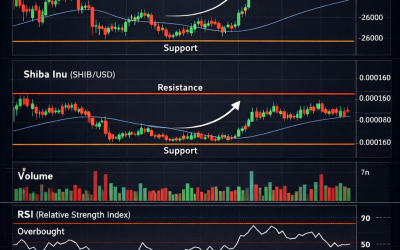
3. Support and Resistance
Support = price level where buyers step in. Resistance = where sellers dump. Drawing these manually on a daily chart helps visualize where price might bounce or stall.
Tip: Combine support zones with DCA. For instance, if SHIB is near a long-term support and RSI is low, start accumulating slowly before a potential pump.
The Power of Combining DCA + Technical Analysis
While DCA protects you from buying all-in at the top, blending it with technical signals improves your edge.
Let’s break it down with an example:
Asset: SHIB
Goal: Accumulate over 3 months, expecting 2026 privacy upgrade impact
Strategy:
- Set weekly buy amount (e.g. $50)
- Only activate weekly buy if RSI < 40 AND price near support
- Optional: Add extra buy if Bollinger Band squeeze is observed
By filtering your DCA entries through basic technical signals, you increase efficiency without overcomplicating your process.
Case Study: Can Corporate Strategy Shape Bitcoin’s Price?
According to JPMorgan, Bitcoin’s climb to $170K might hinge less on mining and more on the financial resilience of large holders like MicroStrategy.
This teaches us something crucial: macro fundamentals + on-chain metrics = long-term signals.
If BTC remains above key technical levels and institutional holders don’t sell under pressure, the uptrend remains viable. Combine that with a basic RSI or EMA support check to plan long-term DCA entries.
Don’t Overlook Meme Coins — But Make Them Data-Driven
Coins like SHIB and PEPE may seem speculative, but they’re increasingly gaining technical structure and community upgrades.
For example, SHIB’s upcoming privacy upgrade could create a strong narrative for a price move — especially if it aligns with technical reversals on charts.
Action: Set alerts for SHIB and PEPE when:
- Price breaks above 50-day EMA
- RSI crosses 30 from below
- Volume spikes 2x from 7-day average
IPO Watch: HashKey & the Bullish Institutional Shift
Asian powerhouse HashKey is launching a $200M IPO in Hong Kong. This highlights a growing institutional interest in crypto infrastructure, not just coins.
If you’re conservative, you might consider:
- Using DCA for exchange-related tokens (e.g. CRO, BNB, or future HashKey token)
- Tracking IPO trends to spot market optimism before it reflects in coin prices
CTA: Want to Master Chart Analysis in 30 Minutes?
Click here to sign up for a free TradingView account and create your first watchlist. Load RSI, Bollinger Bands, and 50/200 EMAs on your charts — and start practicing your moves risk-free.
CTA: Build Your First DCA Plan With This Free Template
Download our Crypto DCA Tracker Spreadsheet to manage your weekly buys, track cost basis, and plan your exits all in one place.
Final Thoughts: Simplicity Wins in Crypto Trading
You don’t need to predict the top or bottom. Instead, align your entries with:
- Strong support zones
- Technical confirmations like RSI & Bollinger Bands
- Macro trends like IPOs and blockchain upgrades
Combine this with a consistent DCA plan, and you’ll avoid FOMO, stay in control, and gradually build an edge — no matter what the market throws at you.
Start small, stay consistent, and let compounding do the heavy lifting.




0 Comments