


With Bitcoin holding near $92K, XRP pushing for new highs, and Bitcoin Cash eyeing $1,000, knowing how to read crypto charts isn’t optional—it’s essential. Here’s your step-by-step guide to practical technical analysis strategies that work in today’s volatile market.
Why Technical Analysis Matters More Than Ever in 2026
In a crypto landscape shaped by regulatory shifts, institutional whales, and unexpected fund outflows, retail traders need reliable tools to navigate the chaos. Recent developments like South Korea’s buyer restrictions and potential US legislation show how fast the market can change. Technical analysis (TA) remains one of the few universal skill sets that helps you adapt to any condition—bullish or bearish.
Step 1: Understand Market Structure
Before diving into candles and indicators, understand the bigger picture. Market structure refers to the sequence of higher highs and higher lows (uptrend) or lower highs and lower lows (downtrend).
For example, Bitcoin holding $92K shows strong support after institutional buying. On the other hand, Bitcoin Cash’s retrace to $622 could just be a pullback in an uptrend if $600 holds firm.
Action Tip:
- Use the 4H and Daily timeframes to define the current market structure.
- Draw swing highs and lows to identify trend direction.
Step 2: Learn to Read Candlestick Patterns
Candlestick formations provide clues on momentum, reversals, and continuation patterns. Here are three must-know patterns:
- Doji: Signals indecision. Often appears at the top or bottom of a trend.
- Engulfing Candle: A full candle that engulfs the previous one, showing strength in reversal.
- Hammer: Bullish reversal after a downtrend. Long wick shows rejection of lower prices.
How to Apply:
Combine candlestick patterns with volume. A bullish engulfing candle on XRP near $2 with increased volume could signal a breakout attempt toward the $3.8 target.
Step 3: Use Support & Resistance Zones
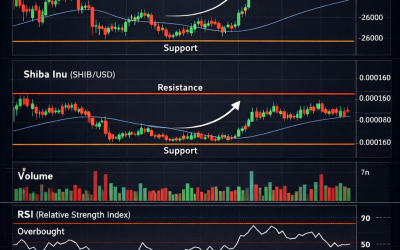
Support and Resistance (S/R) levels are psychological zones where price historically paused or reversed. These are more reliable than exact price points.
Draw S/R zones on key timeframes—Daily and Weekly preferred. For example:
- BTC: Support at $88K, Resistance at $95K
- XRP: Resistance at $2.40, Support at $1.85
- BCH: Resistance at $750, Support at $580
Want help identifying high-probability S/R zones? Try TradingView for free charting tools.
Step 4: Master Momentum Indicators
Using RSI, MACD, and Volume can confirm or reject your ideas based on price action.
- RSI (Relative Strength Index): Above 70 = Overbought, Below 30 = Oversold. Look for divergences.
- MACD: Shows momentum shifts. Bullish crossover = potential upward reversal.
- Volume: Confirms breakouts. A breakout without volume = likely fakeout.
Example:
If BCH breaks $650 with RSI at 55 and MACD just turned bullish, it could confirm a move toward $750. Confluence is key.
Step 5: Create a Repeatable Trade Strategy
Here’s a simple three-step strategy that works for both trending and ranging markets:
- Identify Trend: Use 4H and Daily candles to define direction.
- Wait for Pullback: Price returns to support/resistance zone or EMA (like the 21 EMA).
- Confirm With Indicators: RSI + MACD + Candlestick pattern before entry.
Set stop loss below the structure low. Risk only 1-2% per trade.
Real-World Case Study: XRP Trade Setup
Let’s apply what we learned:
- Trend: Bullish above $2
- Support: $1.85 zone
- Breakout Level: $2.40
- Indicators: RSI at 53, MACD bullish
Strategy: Wait for a retest of $2.05–$2.10. Enter long with a target of $3.50 and stop loss under $1.85. Risk/reward: 1:3.
Advanced Tip: Trade the News, But Chart the Truth
Legislation like the US Market Structure Bill or South Korea’s exclusion law can impact liquidity and sentiment short-term. But they don’t change technicals overnight.
Always validate the narrative with the chart. A negative headline is irrelevant if price is forming higher lows on increasing volume.
Risk Management: The Trader’s Real Edge
No strategy works without proper risk control. Here’s how to stay in the game:
- Use Stop Losses: Always. Even with strong setups.
- Position Size: Never risk more than 2% of your capital per trade.
- Journal Your Trades: Track entries, exits, and emotions. Learn from your data.
Want a free crypto trading journal template? Download it here.
Final Thoughts: Technical Analysis is a Skill That Pays
In a market where fundamentals shift with every tweet or legislation update, understanding technical analysis gives you an edge. It’s your roadmap in uncertain terrain.
Apply what you’ve learned here to current setups in Bitcoin, XRP, and BCH. Test your strategy in demo mode, refine your risk, and scale only when consistent.
Don’t just watch the charts. Learn to read them—and trade them—with confidence.
Looking to level up your crypto trading? Get real-time fundamentals and chart patterns daily on CryptoSlate.



0 Comments