


With the crypto market facing daily volatility — like the recent market dip of 0.9% and XRP flashing sell signals — learning how to read technical charts isn’t optional anymore, it’s essential. This guide will show you **how to decode charts**, **spot entry signals**, and **build a trading plan** that works in any condition.
Why Technical Analysis Matters in Today’s Crypto Landscape
The crypto market on January 16, 2026 saw 88 of the top 100 coins in the red, with a global market cap dip of 0.9%. Volatility like this is not rare — and that’s why technical analysis (TA) is your best friend.
Technical Analysis helps traders make decisions by analyzing past price data and patterns. It provides a framework for:
- Identifying entry and exit points
- Spotting market trends early
- Managing risk with informed stop-losses
Let’s break down the essentials — and go beyond theory with real strategies you can start using today.
1. Understanding the Basics: Charts, Candlesticks & Timeframes
Before diving into strategies, you must understand how to read a crypto chart. Most trading platforms like TradingView or Binance Pro offer candlestick charts by default.
Key Components:
- Candlesticks: Each candle shows open, high, low, and close prices in a specific time frame.
- Timeframes: Use 1H–4H for short-term trades, Daily–Weekly for swing trades.
- Volume: Shows strength behind price moves — low volume = weak trend confirmation.
🔥 Tip: Always analyze across multiple timeframes. If the daily chart looks bullish, but the weekly is bearish, stay cautious.
2. Use SuperTrend and RSI to Catch Entry & Exit Points
According to NewsBTC, XRP’s SuperTrend flashed a sell signal despite rumors of a “super cycle.” This highlights how sentiment can mislead — but indicators like SuperTrend and RSI can guide you.
SuperTrend: A trend-following indicator that turns green in bullish phases, red in bearish. Use it to:
- Enter trades when the SuperTrend flips green with confirmation from RSI
- Exit or short when it turns red
RSI (Relative Strength Index):
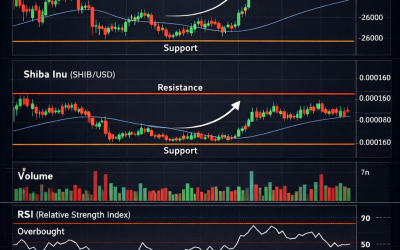
- Overbought (>70) = possible reversal or pullback
- Oversold (<30) = potential buying opportunity
✅ Strategy: Combine SuperTrend and RSI. Wait for RSI to move from oversold into a neutral zone (30–50) while SuperTrend flips green — that’s your trigger.
3. Trendlines, Support and Resistance: Your Trading Compass
Use **trendlines** to visualize market direction. A simple upward-sloping trendline connecting higher lows indicates a bullish trend. A break below? Re-evaluate your hypothesis.
Support and Resistance:
- Support: Price level where buying interest prevents further decline.
- Resistance: Price level where selling interest caps upside movement.
Mark them using horizontal lines. Watch how the price behaves near these levels — don’t just jump in.
Pro Tip: Use volume spikes and candlestick reversal patterns (like hammer or engulfing candles) near support/resistance for confirmation.
4. Avoiding the Hype: The Starknet vs. Solana Lesson
As CryptoSlate reported, Solana criticized Starknet for inflated valuations and low activity. This shows how **social sentiment and ‘mercenary liquidity’** can distort perceived value.
Don’t trade based on Twitter drama or FDV hype. Instead:
- Analyze actual on-chain activity (daily users, transactions)
- Stick with charts and data over opinions
- Use tools like DeFiLlama or Dune Analytics to verify claims
💡 Make data-driven decisions — not emotional ones.
5. Risk Management: Protect Your Capital First
Even with the best setups, some trades will fail. Your defense? Smart risk management.
Golden Rules:
- Never risk more than 1–2% of your capital per trade
- Use stop-loss orders placed below support or above resistance
- Set a reward-to-risk ratio of at least 2:1
Example: If you enter BTC at $42,000 with a stop-loss at $41,200 and your target at $44,000 — you risk $800 to make $2,000 (2.5:1 ratio).
*Always define your exit before entering any trade.*
6. Use Stablecoins for Strategic Entries
With brokers like Interactive Brokers now supporting stablecoin deposits, stablecoins are more than just a safe haven — they’re your dry powder.
How to Use Them:
- Convert profits into USDT/USDC during uncertain markets
- Park capital while waiting for setups
- Use them as a base currency in DEXs and CEXs
📈 Tip: When the market dips like on Jan 16, stablecoins let you buy the fear with precision and speed.
7. Regulated Access: Belgium’s KBC Case Study
As reported by Bitcoin.com, KBC now offers regulated crypto access in Belgium. Why does this matter?
Key Benefits:
- More transparency for new traders
- Bank-grade security for your funds
- Fewer scams and rugpulls
If you’re in Europe, consider using local, regulated providers to reduce counterparty risk — especially when experimenting with new strategies.
⚠️ Bonus Tip: Use regulated platforms for core holdings, and only use DEXs for smaller, tactical positions.
8. Build Your First Trading System (Template)
Here’s a simple, repeatable system for beginners:
- Trend Identification: Use 50 EMA and SuperTrend on daily chart
- Entry: Confirm trend with RSI and volume breakout
- Stop-Loss: Set just beyond key support/resistance
- Target: Use Fibonacci retracements or previous highs
- Journal: Log reasons for trade, results, and reflections
Want a downloadable crypto trading journal template? Click here to grab it for free and level up your discipline.
9. Final Thoughts: Trade Smart. Trade Often. But Trade With a Plan.
Technical analysis isn’t about predicting the future. It’s about managing risk, improving timing, and increasing the probability of success. Use it to filter out noise, ignore hype, and focus on what really matters — the chart.
Want to practice everything you’ve learned risk-free? Open a free TradingView chart now and start marking up your first trade.
📚 Stay consistent. Stay analytical. And remember — the best traders are the best risk managers.



0 Comments