
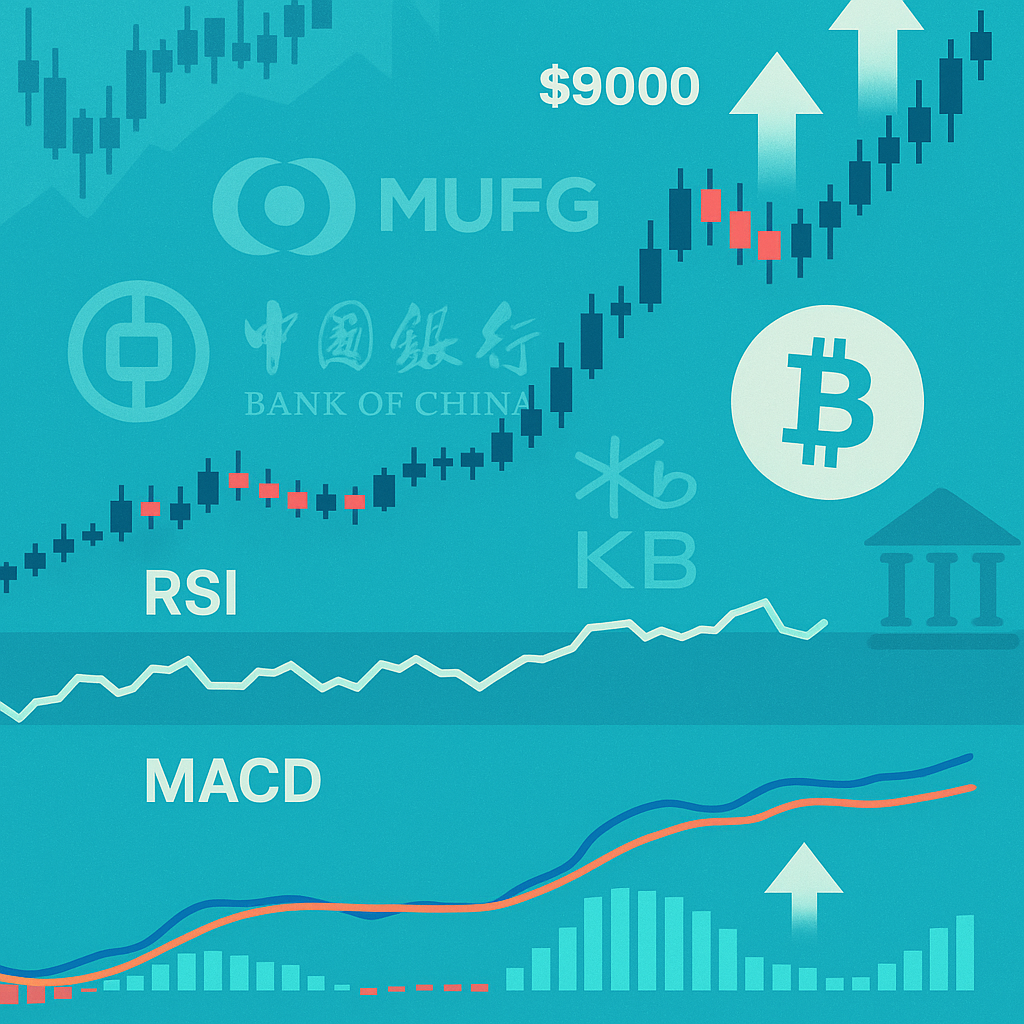

With Bitcoin eyeing $100K and crypto adoption booming in Asia, there’s no better time to master the art of crypto trading. This guide breaks down actionable strategies and chart-reading skills you can start applying today.
Why Technical Analysis Matters in 2025
As Bitcoin hovers near $90,000 and institutions like GoTyme Bank and Robinhood expand crypto access in Asia, market participation is rising fast. But with increased opportunity comes the risk of volatility. That’s where technical analysis (TA) becomes your edge.
Whether you’re brand new or already trading, understanding how to read charts and apply TA can help you make smarter decisions, reduce losses, and time your trades more effectively.
1. Understand the Basics: What is Technical Analysis?
Technical Analysis is the study of price movements and volume through charts to predict future trends. Unlike fundamental analysis, TA focuses exclusively on patterns, indicators, and historical price data.
- Price – Historical and current prices tell a story about market sentiment.
- Volume – Shows the strength behind a price move.
- Indicators – Tools like RSI, MACD, and Bollinger Bands help identify potential entry or exit points.
2. Must-Know Chart Patterns for Crypto Traders
Crypto markets often repeat behavioral patterns. Here are the most common chart formations you should know:
🔹 Double Bottom & Double Top
Double Bottom: Indicates a bullish reversal. Look for two lows of roughly equal height followed by a breakout upward.
Double Top: Signals bearish reversal. Watch for two peaks with a neckline support—once broken, expect a drop.
🔹 Head & Shoulders
One of the most reliable patterns. A head and shoulders top predicts a reversal from bullish to bearish. The inverse version (head and shoulders bottom) heralds a bullish shift.
🔹 Triangles
These can be symmetrical, ascending, or descending. Breakouts from triangles often precede major moves. Use volume confirmation to validate the pattern.
3. Key Technical Indicators: How and When to Use Them
Indicators help you gauge momentum, overbought/oversold conditions, and trend strength. Here’s how to apply the top three:
Relative Strength Index (RSI)
RSI measures the speed of price movements. It ranges from 0 to 100. Above 70 = Overbought, Below 30 = Oversold.
Strategy: Pair RSI with candlestick analysis. If RSI drops below 30 and a bullish engulfing candle forms, consider a long entry.
Moving Averages (MA)
Simple Moving Averages (SMA) and Exponential Moving Averages (EMA) smooth out price data. The 50-day and 200-day MAs are most used.
Strategy: Use the Golden Cross (50-MA crossing above the 200-MA) as a buy signal. Death Cross = bearish.
MACD (Moving Average Convergence Divergence)
MACD reveals changes in momentum and trend direction. Look for crossovers between MACD and its signal line.
Strategy: Combine MACD crossovers with volume spikes for validated entries.
4. Actionable Strategy: Bitcoin’s Path to $100K
According to CryptoNews, Bitcoin’s $100K target is still in play, supported by macro and TA signals:
- On-chain metrics like active addresses and transaction volume are up.
- Institutional inflows have risen, particularly in Asian markets.
- Macro catalysts: The upcoming 92% Fed rate cut probability is bullish for Bitcoin.
Strategy: Use support/resistance levels around $88,000 and $92,000 to layer in entries. Watch RSI and MACD on daily charts for confirmation. Avoid trading during the Fed announcement window unless you’re experienced.
5. Risk Management Essentials
Even the best TA won’t save you from poor risk management. Here are golden rules:
- Never risk more than 1-2% of your capital per trade.
- Always use stop-loss orders below support levels or above resistance.
- Use position sizing based on your risk tolerance and trade setup.
6. How Asian Adoption Can Influence Your Trading Strategy
With Robinhood entering Indonesia and GoTyme onboarding 6.5M crypto users, retail demand in Asia is growing. This can lead to:
- Increased trading volume during Asian market hours.
- Volatility spikes aligned with regional news or regulation.
Strategy: Monitor the Asia open (GMT+8) for volume surges. Adjust your charts to track activity during these hours.
7. Tools and Resources to Level Up Your TA Game
- CoinGecko – Market data and token metrics.
- TradingView – Charting, indicators, alerts.
- CryptoNews – Stay updated on macro trends, Fed updates, and adoption stories.
8. Putting It All Together: Sample Trade Setup
Example: BTC is forming an ascending triangle at $89,500. RSI is at 55, MACD is turning positive, and volume is increasing.
Trade Plan:
- Entry: $90,200 upon confirmed breakout
- Stop-Loss: $88,400 below triangle support
- Target 1: $94,000 (previous resistance)
- Target 2: $98,500 (psychological level)
📈 Ready to Take Control of Your Trades?
Sign up for our Free Beginner’s Crypto TA Course and get weekly chart breakdowns, live market updates, and exclusive strategies delivered to your inbox.
9. Final Thoughts: The 2025 Crypto Trading Mindset
With global adoption accelerating and macro conditions favoring crypto, you’re in the right place at the right time. But success depends on preparation, discipline, and continuous learning.
Mastering technical analysis is not optional—it’s your roadmap to navigating the market with confidence.
🚀 Don’t Miss the Next Breakout!
Join our Crypto Trading Newsletter for real-time trade setups, indicator alerts, and macro insights every week.
Further Reading
- Bitcoin Price Analysis: Fed Rate Cut Probability
- Asia Market Open: Crypto & Fed Updates
- Latest Bitcoin Price Predictions




0 Comments