


Bitcoin’s bounce might be a bull trap, XRP is rallying, and Morgan Stanley just filed for crypto ETFs—but what does it all mean for your trading strategy in 2026? In this guide, we break down how to interpret the latest market signals, read key chart patterns, and build trading strategies around institutional moves like ETFs.
Understanding the Current Market Landscape
As of January 2026, the crypto market is undergoing a pivotal shift. According to CryptoNews, the total market cap has dropped by 3.1%, with over 95% of top coins in the red. Yet, the industry is far from quiet. Morgan Stanley—a $1.8 trillion banking giant—has filed for two new crypto ETFs focused on Bitcoin and Solana, omitting Ethereum and XRP.
This mix of institutional interest, technical patterns, and market pullbacks creates a perfect storm for traders. But only if you know how to read it.
1. Spotting Bear Flags and Bull Traps: What to Watch For
Let’s address the elephant in the room: Is the recent Bitcoin bounce a bull trap? Analyst Ali Martinez compared current price action to the infamous 2022 bear flag—a continuation pattern that often leads to sharp declines.
What is a Bear Flag?
- It typically follows a sharp price drop (the flagpole).
- The price consolidates upwards in a narrow range (the flag).
- Breakdown from the flag suggests a continuation of the downtrend.
How to Trade It:
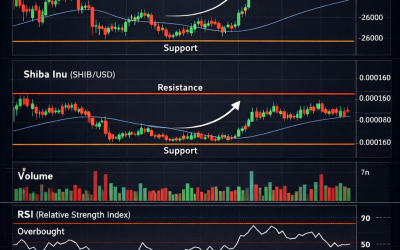
- Switch to a 4H or daily chart to identify the flag structure.
- Use volume analysis—bear flags often form with declining volume.
- Set entry triggers below the consolidation support line; confirm with RSI or MACD.
- Use stop-losses just above the recent highs to avoid fakeouts.
🚀 Pro Tip: Don’t rely on pattern recognition alone. Combine it with indicators like the Relative Strength Index (RSI) or MACD to filter out noise.
2. ETF Filings: A New Wave of Institutional Support
Morgan Stanley’s ETF applications send a clear message: Wall Street is recommitting to crypto. However, their omission of Ethereum and XRP raises questions.
What does this mean for traders?
- Bitcoin (BTC) and Solana (SOL) may see sustained institutional inflows.
- Ethereum (ETH) and XRP might underperform in the short term or trade sideways.
- Expect ETF news to create volatility spikes—ideal for swing trades and scalping.
Trading Strategy: Consider ETF-related tokens as momentum assets. Use breakout strategies on days of regulatory announcements or ETF approval rumors. Monitor CoinMarketCal for event-based setups.
Want to stay ahead of ETF-driven market movers? Learn how ETFs impact price flow here.
3. XRP’s Surge: Real or Retail FOMO?
Unlike most top 100 tokens, XRP has seen a 20% rally and $46 million in inflows in just one week. That’s not retail money—it’s institutional. The full analysis is available here.
Chart Reading Tip: On XRP’s daily chart, look for:
- Higher lows combined with consistent volume
- MACD crossover above zero line
- Bollinger Bands opening up—indicating volatility expansion
How to Trade:
- Enter on pullbacks to dynamic support (e.g., 20 EMA or trendline support).
- Set trailing stops below the last swing low.
- Take partial profits at Fibonacci extension levels (1.618, 2.618).
_Want to develop your own XRP breakout system?_ Read the full XRP setup guide.
4. Volume and Sentiment: The Hidden Strength Indicators
Volume is often the first confirmation that a move is real. While price tells you what happened, volume shows you the conviction behind it.
How to Use Volume in Your Trading:
- Rising prices + rising volume = bullish strength
- Rising prices + falling volume = potential reversal
- Breakouts on high volume are more reliable than those with low volume
Combine volume analysis with TradingView indicators like OBV (On-Balance Volume) or Volume Profile Visible Range (VPVR) to validate entries and exits.
5. Building a Repeatable Crypto Trading Strategy
Now that we’ve dissected patterns, ETF catalysts, and volume, let’s bring it all together into a simple, repeatable trading process.
🚧 Your 5-Step Trading Blueprint:
- Scan the news: Watch ETF filings, inflows, and sentiment. Use resources like CryptoNews and CryptoSlate.
- Read the chart: Identify patterns like flags, wedges, or triangles. Confirm with indicators.
- Time your entry: Use breakout or retracement levels on 1H, 4H, or daily charts.
- Manage risk: Set stop losses, use position sizing calculators, and never risk more than 2% per trade.
- Review trades: Journal your wins and losses. Pattern recognition improves with experience.
✨ Want a pre-built trading journal template? Download it here.
Final Thoughts: 2026 Will Reward the Informed Trader
With Morgan Stanley’s ETF filings, market-wide pullbacks, and breakout opportunities in coins like XRP and SOL, 2026 may be the year that separates informed traders from hopeful HODLers.
Stay focused, stay systematic, and remember: Rome wasn’t built in a bull market.
📘 Bonus: If you’re just getting started, check out our complete guide to reading candlestick charts to kickstart your charting journey.
👉 Join our free Discord trading community to get real-time analysis, chart setups, and strategy insights from experienced traders right here.


0 Comments