
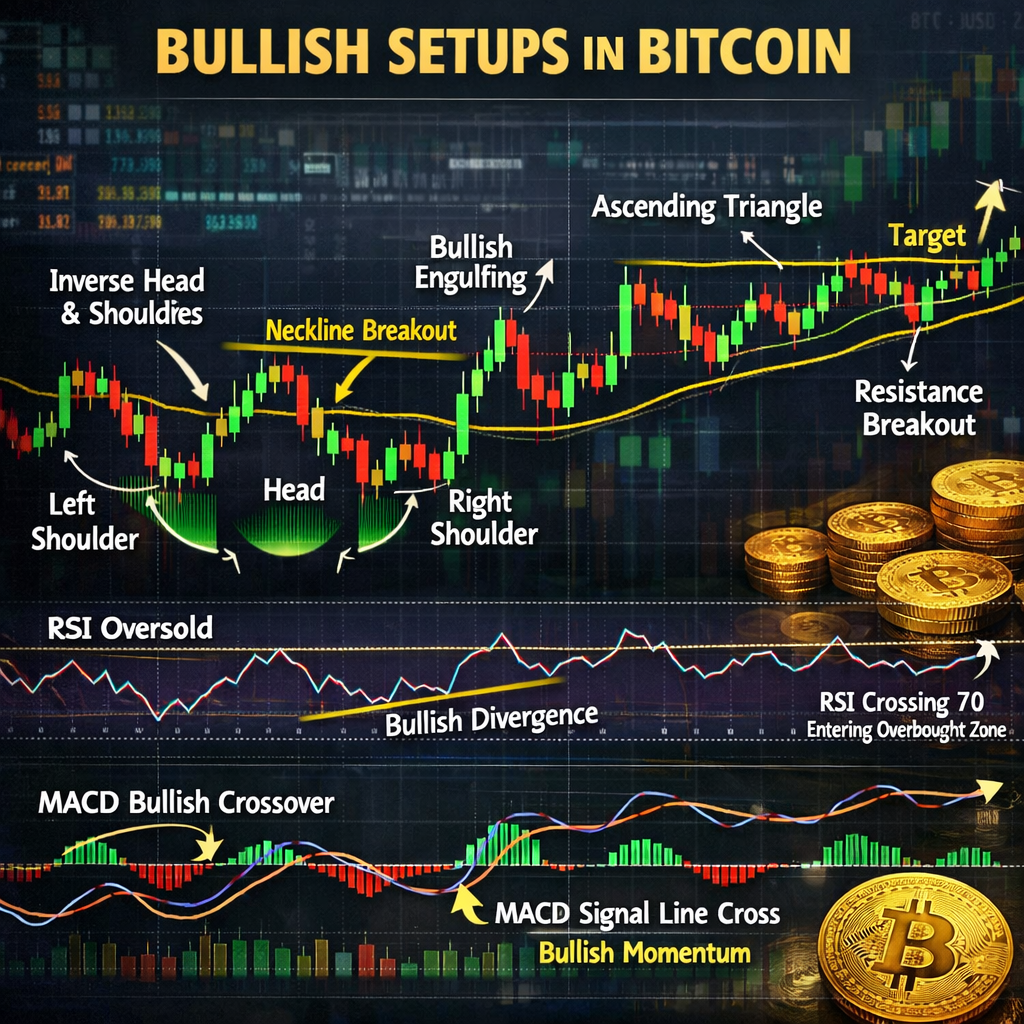

With Bitcoin surging above $95,000 and analysts targeting $130,000, it’s more important than ever to master technical analysis and trading strategies. Whether you’re new or looking to level up, this guide will equip you with the tools to make smarter trading decisions in today’s volatile crypto market.
Why Now Is the Time to Pay Attention
Bitcoin is flashing strong bullish signals. After breaking above $95,000 due to a positive CPI surprise, and with Gold reaching all-time highs, some analysts believe Bitcoin could be on path to $130,000. Add to that institutional moves in Germany and Russia (like DZ Bank’s new MiCAR license and Russia’s retail-friendly bill), and you have a perfect storm brewing for crypto momentum.
But how can you capitalize on this movement?
This article breaks down:
- How to read crypto charts
- Essential technical indicators
- Actionable strategies to trade the current momentum
Understanding the Basics: What Is Technical Analysis in Crypto?
Technical Analysis (TA) is the study of historical price action to forecast future price movements. Unlike fundamental analysis, TA focuses on charts, indicators, and patterns.
Why it matters: Crypto is volatile and news-driven. But patterns often repeat themselves, and reading them correctly can give you an edge.
Chart Types: Start with the Right View
Most trading platforms like TradingView or Binance offer different chart types:
- Line Chart: Simple, but lacks detail.
- Bar Chart: Shows open, high, low, close (OHLC) per period.
- Candlestick Chart: Most popular; visually highlights price action and sentiment.
Pro Tip: Use candlestick charts on the 1H, 4H, and 1D timeframes to spot trends early.
Key Candlestick Patterns to Know
Here are three must-know patterns for Bitcoin and altcoin trading in 2026:
1. Bullish Engulfing
A small red candle is followed by a much larger green candle that “engulfs” it. This signals a potential reversal after a downturn.
2. Doji
Shows indecision. A Doji after a strong trend could mean a reversal is coming.
3. Hammer / Inverted Hammer
Look for a small body and long wick. Found at the bottom of downtrends, they signal that buyers are stepping in.
How to Use Technical Indicators Effectively
Indicators help confirm what the charts are telling you. Here are a few you can trust:
1. RSI (Relative Strength Index)
Shows momentum. Values above 70 = overbought. Below 30 = oversold. In the current bullish trend, look for RSI dips to buy the pullback.
2. Moving Averages (MA & EMA)
Use 50-day EMA and 200-day EMA. When the 50 crosses above the 200, it’s a Golden Cross — a strong bullish signal.
3. MACD (Moving Average Convergence Divergence)
Great for spotting trend reversals. A bullish crossover (MACD line above Signal line) = potential buy signal.
Putting It All Together: A Sample Trading Strategy
Let’s say Bitcoin just dipped to $92,000 after hitting $95,000. You want to enter a position. Here’s how you might proceed:
- Check 1H and 4H Candlestick charts — look for a bullish candlestick pattern (like a hammer or bullish engulfing).
- Confirm with RSI — is it below 50 and turning upward?
- Is the MACD about to cross bullishly?
- Check if price is near your 50 EMA support.
- If all signals align, consider entering a **long position with a tight stop-loss** under the recent low.
Take Profit? Next resistance is ~$100,000, then $110,000. Set staggered exits or use a trailing stop to ride the trend.
Want a visual breakdown of this setup? Use this free charting tool to experiment with live BTC charts.
Risk Management: Don’t Trade Without It
Even the best setup can fail. Here’s how to protect your capital:
- Risk only 1-2% of your portfolio on any trade.
- Always use a stop-loss.
- Set alerts, not emotions. Let data guide your entries and exits.
Market too volatile? Use limit orders, not market orders, to avoid slippage.
What’s Fueling the Momentum in 2026?
Let’s connect the dots from recent news for context:
- Gold ATH: Bitcoin historically lags gold — analysts are projecting a catch-up to $130K. (source)
- CPI data: Lower inflation = higher risk appetite. Wall Street re-entering BTC. (source)
- Institutional onboarding: DZ Bank enters crypto with a regulated trading platform. (source)
- Retail Access in Russia: Legislative change could trigger new demand. (source)
All this points to one thing: This is not just a pump; it’s part of a broader adoption cycle.
Best Times to Trade Bitcoin
Timing matters. Here’s when you’ll find the most volume & volatility:
- 8 AM – 11 AM EST: Overlap of EU & US sessions
- Sunday night into Monday: Weekly reset — high volatility
- Before FOMC, CPI, or Fed updates: Watch the economic calendar!
Want to catch these live? Subscribe to a platform like CryptoPanic or follow @WatcherGuru for real-time alerts.
CTA: Ready to Level Up?
If you’re serious about turning crypto trading into a skillset, consider keeping a trading journal (track setups, emotions, outcomes). Combine that with backtesting your strategies on TradingView, and you’ll grow faster than 90% of retail traders.
Want access to our free Crypto Trading Checklist PDF? Download it here and validate every setup before risking your capital.
Final Thoughts: Consistency Over Hype
Markets are booming, yes — but smart traders focus on consistent setups, not hype. Use the current momentum as a training ground. Master charts. Respect risk. And be ready for what’s next.
If you’re new, start small. If you’re experienced, refine your edge. The market rewards those who are prepared.
Don’t just watch Bitcoin run — learn how to ride it.
Learn more strategies and get weekly chart setups by subscribing to the Crypto Edge Weekly Newsletter.



0 Comments