
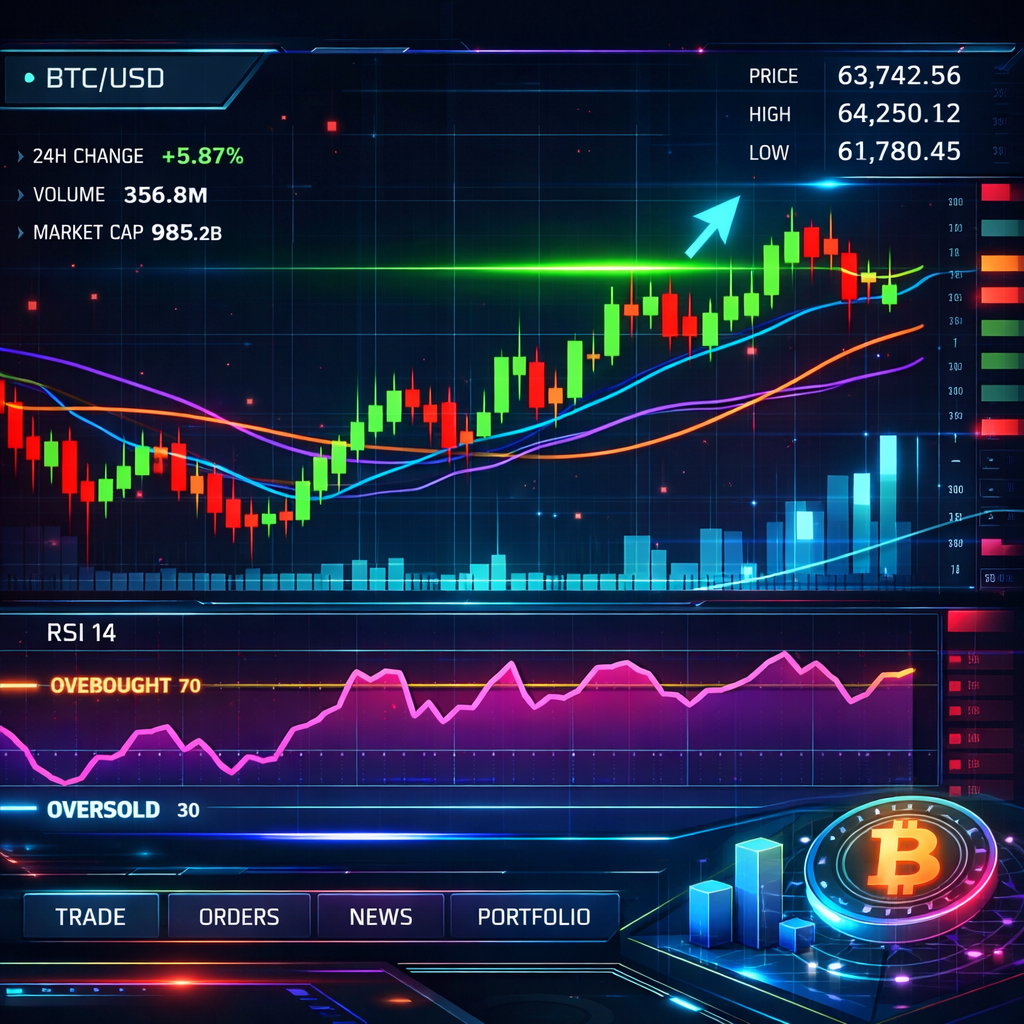

With Bitcoin steady near $89,300 and SHIB seeing massive withdrawals from exchanges, now’s the time to sharpen your chart-reading skills. Learn how to interpret crypto charts, identify trends, and make smarter trades—even amid extreme market conditions.
Understanding the Current Market Landscape
Before diving into technical analysis, let’s set the scene. As of January 28, 2026, the crypto market capitalization has risen by 2.2%, reaching $3.12 trillion. This bounce comes after a flat day, showing signs of renewed bullish momentum. However, deeper undercurrents tell a more complex story:
- Shiba Inu (SHIB) saw over 250 billion tokens withdrawn from exchanges—typically a bullish sign as supply tightens. (source)
- Bitcoin (BTC) is struggling to outperform silver, raising investor concerns. (source)
- Crypto whales are diversifying into gold, a sign that macro-hedging behavior is increasing. (source)
- Spot volume is down sharply, threatening the structure of the market. (source)
So what do all these trends mean for you as a trader? It means that technical analysis is more important than ever. With fundamentals pulling in different directions, chart-reading can give you the edge to make confident, timely decisions.
What Is Technical Analysis (TA) and Why It Matters
Technical Analysis is the study of market price action using charts and indicators. It helps you answer essential questions like:
- Is this a good time to buy or sell?
- Where should I place my stop-loss?
- Is this trend sustainable?
Unlike fundamental analysis, TA focuses on what the price is doing now—not what it should be doing. This makes it ideal for trading volatile assets like cryptocurrencies.
Basic Tools to Read Crypto Charts
Here are the essential components of any crypto chart:
Candlesticks
Each candle represents a timeframe (e.g., 1 hour, 4 hours, 1 day). The body shows the open and close; the wicks show highs and lows.
Support and Resistance
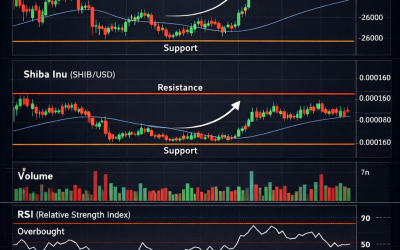
Support: A price level where buying interest is strong enough to prevent the price from falling further.
Resistance: A level where selling interest is strong enough to cap upward momentum.
Volume
Volume confirms the strength of price movements. Price up on high volume = strong move.
Trendlines and Channels
Use diagonal lines to track upward or downward trends. Channels help you see potential breakout areas.
Moving Averages (MA)
Popular ones include the 50-day and 200-day MAs. They smooth price action and act as dynamic support/resistance.
Pro tip: Use TradingView for real-time charts and custom indicators.
Three Actionable Crypto Trading Strategies
1. The Breakout Strategy
This strategy is ideal when the price is consolidating near resistance.
- Identify a horizontal resistance zone.
- Wait for a strong candle to close above resistance on high volume.
- Enter after the breakout with a stop-loss just below resistance.
Example: If SHIB breaks above its recent consolidation zone after the 250B token withdrawal, a breakout trade could be profitable.
2. The Moving Average Crossover
Use two moving averages: a short-term (e.g., 10-day) and long-term (e.g., 50-day).
- Buy Signal: When the short MA crosses above the long MA.
- Sell Signal: When the short MA crosses below the long MA.
This is a good strategy for trending markets like Bitcoin when it’s not range-bound.
3. RSI Divergence
The Relative Strength Index (RSI) tracks momentum. Look for divergences:
- Bullish Divergence: Price makes lower lows; RSI makes higher lows → buy signal.
- Bearish Divergence: Price makes higher highs; RSI makes lower highs → sell signal.
Use RSI divergence especially when markets are overbought or oversold (RSI > 70 or < 30).
Common Mistakes to Avoid
- Chasing pumps after the breakout. Wait for confirmation.
- Ignoring volume—price without volume is a trap.
- Overusing indicators. Stick with 2-3 that you understand well.
- Failing to set stop-losses. Always manage your risk.
How to Practice Without Risk
If you’re new to trading, start with a paper trading account. This lets you simulate trades using real market data without risking actual money.
TradingView and Binance’s mock trading are great places to start.
✅ Ready to level up? Join our free Telegram group for daily chart setups, market insights, and Q&As with experienced traders. Click here to join.
How to Read Between the Lines in 2026
With the crypto market evolving rapidly, it’s crucial to combine TA with market sentiment:
- Watch for large token withdrawals (like the recent SHIB move). These often precede rallies.
- Track macro trends: If whales are moving into gold, they may expect volatility in crypto.
- Check spot volume: Declining volume may lead to thinner order books, exaggerating price swings.
These clues help you understand more than just the candles—they show what traders are thinking.
Final Thoughts and Next Steps
Technical analysis is not a crystal ball, but it’s your best weapon in the world of crypto trading. By mastering charts, you gain the power to:
- Enter trades with confidence.
- Time exits precisely.
- Protect your portfolio from unexpected swings.
🚀 Want more pro-level strategies? Subscribe to our weekly newsletter for deep-dive breakdowns, live trade setups, and market updates. Join the list here.
Remember: Consistency beats luck, and preparation beats panic. Learn the charts, follow the trends, and you’ll never trade blindly again.



0 Comments