


The crypto market dropped 2.2% today, with Ethereum slipping below $3,000 and Bitcoin struggling near $90,000. What does this mean for your trades — and how can you make better decisions during market downturns? This guide breaks down actionable chart-reading skills and technical analysis strategies that help you profit even in volatile conditions.
Understanding Why the Market Is Down: A Quick Recap
On January 23, 2026, the total cryptocurrency market cap fell by 2.2%, pulling back to $3.11 trillion (source). Ethereum dropped below $3,000, while Bitcoin struggled to hold the $90,000 level despite a short-lived rebound caused by political developments (source).
To succeed in this environment, traders must go beyond headlines and use real data—charts, volume, and indicators—to navigate volatility.
Why Technical Analysis Matters More Than Ever
News can be noisy. Fundamentals often lag. But charts? They show real-time investor behavior. By learning how to read candlesticks, spot support and resistance zones, and apply key indicators, you can react faster and smarter.
The Basics: Candlestick Chart Patterns Explained
Candlestick charts show four core values for a given time frame: Open, High, Low, and Close (OHLC). Each candle tells a story:
- Green/White Candles: Price closed higher than it opened (bullish)
- Red/Black Candles: Price closed lower than it opened (bearish)
Common Candle Patterns to Watch
- Doji: Indicates indecision; often appears before reversals.
- Hammer: Bullish reversal signal at the bottom of a trend.
- Shooting Star: Bearish reversal signal at the top of a trend.
Want to explore more patterns? Check this Investopedia guide.
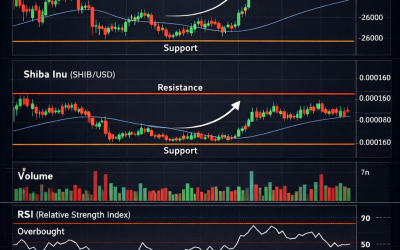
Support and Resistance: Your Navigation Grid
In the recent drop, Ethereum bounced off several minor supports before slipping under $3,000 (source). Identifying these zones can help you time entries and exits.
How to Identify Key Levels
- Support: A price level where buying pressure outweighs selling.
- Resistance: A level where selling pressure outpaces buying.
You can find these by looking for areas where price has repeatedly reversed or stalled.
Using Moving Averages to Spot Trends
Moving averages smooth out price data to show the underlying trend. The two most used are:
- 50-day MA (Medium-term trend)
- 200-day MA (Long-term trend)
The Golden Cross (50-day crosses above 200-day) signals a bullish trend. A Death Cross signals a bearish turn. Ethereum hasn’t formed a strong Golden Cross since late 2025, so caution may be warranted.
Volume and RSI: Confirming or Rejecting Price Moves
Volume tells you how strong a move is. A price rise with low volume? Probably fake. High volume? That’s conviction.
Relative Strength Index (RSI) shows whether an asset is overbought (>70) or oversold (<30). As of this week, Ethereum’s RSI is approaching oversold territory—hinting at a potential bounce.
Fibonacci Retracement: Predicting Reversal Points
This tool helps you identify potential retracement levels in a trend. Common levels include 38.2%, 50%, and 61.8%—often used to set entries or stop losses.
For example, Bitcoin’s recent rebound from $87,300 could be a bounce off its 38.2% retracement from December lows (source).
Actionable Trading Strategies for Volatile Markets
1. Breakout Trading with Confirmation
Wait for price to break above resistance or below support. Confirm with volume before entering.
- Entry: After confirmed breakout with 2x average volume
- Stop-Loss: Below last candle’s low/high
- Target: Next major resistance/support level
2. RSI Divergence Strategy
If price makes a new low but RSI doesn’t — that’s bullish divergence. Opposite is bearish. This can signal early reversals.
3. Range Trading
When market is going sideways (like Bitcoin near $90,000), buy near support, sell near resistance, and repeat.
- Tip: Use Bollinger Bands to identify range boundaries
4. Use Stop-Limit Orders to Manage Risk
Especially during volatile days like Jan 23, stop-limit orders protect you from sudden wicks. Never trade without a plan and risk management setup.
Integrate Macro Events into Your Technical Analysis
Market sentiment is often driven by unexpected news — like Trump’s tariff U-turn or CZ’s surprising Davos appearance (source).
Combine chart signals with macro events for higher conviction trades.
CTA: Want a free macro + technical signals checklist? Download our toolkit now.
Best Tools to Practice Technical Analysis
- TradingView – Best for charting and custom indicators
- CoinMarketCap – Market cap and volume data
- Glassnode – On-chain analytics
Final Thoughts: Stay Calm, Stay Strategic
Markets move in cycles. Fear and greed dominate headlines. But with a chart-based system, you can cut through noise and find opportunity — even on days like January 23.
CTA: Ready to level up your chart reading? Join our free 5-day Technical Analysis Bootcamp.
Resources and Continued Learning
- BabyPips School of Pipsology – Beginner-friendly technical education
- CryptoSlate – Real-time news and insights
- CoinGecko – Market data aggregator
Disclaimer: This article is for educational purposes only, not financial advice. Always do your own research and only invest what you can afford to lose.




0 Comments