
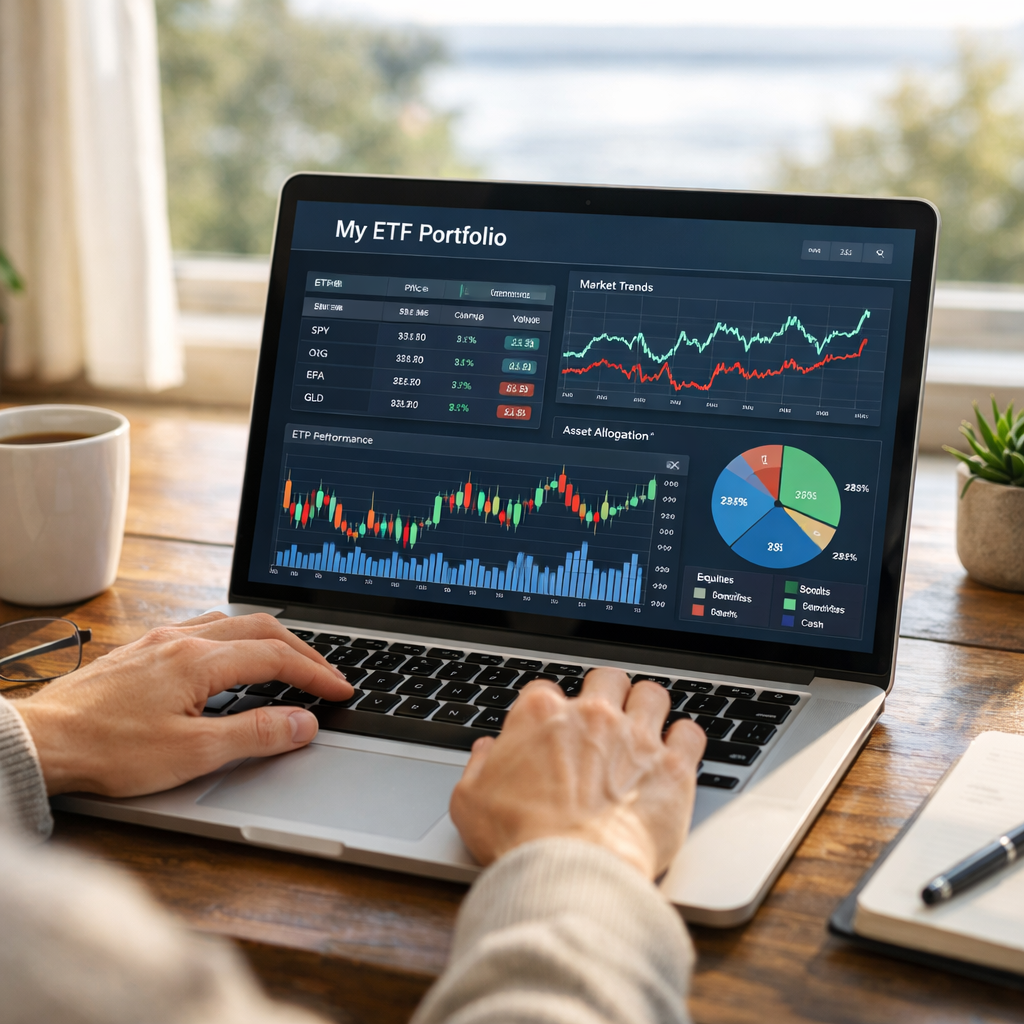

Crypto markets are rattling investors, but strategic ETF investing may be your safest path forward.
Understanding the Current Market Landscape
The cryptocurrency market, particularly Bitcoin, has entered a turbulent phase. With Bitcoin falling 8% on February 3, 2026, and Bitcoin ETFs dipping below $100B in assets under management, investors are understandably jittery.
Yet even in uncertainty, there is opportunity, especially through the disciplined use of Exchange-Traded Funds (ETFs). Let’s explore how you can navigate volatility using smart ETF strategies, whether you’re a new investor or looking to rebalance your portfolio in 2026.
Why ETFs Make Sense Right Now
ETFs offer instant diversification, liquidity, and cost-effective exposure to entire sectors or themes. In volatile times, these qualities make ETFs a compelling choice for investors seeking to reduce risk while staying invested.
For example, during the recent Bitcoin correction, some investors fled crypto-specific ETFs, causing a $1.5B outflow over four days. However, the sudden rebound with $561.8M in inflows suggests that ETFs remain a preferred vehicle for reentry once sentiment stabilizes.
The Two Types of ETF Strategies for Volatile Markets
1. Defensive Sector Strategy
Defensive ETFs focus on less cyclical sectors such as utilities, healthcare, and consumer staples. These sectors tend to hold up during downturns because demand for their products is relatively stable.
Examples:
2. Thematic Diversification Strategy
Thematic ETFs align with long-term macro trends such as AI, renewable energy, or blockchain technology. While these may carry higher short-term risk, they can offer outsized returns over multi-year horizons.
Examples:
How to Evaluate ETFs During Market Shocks
Use the following checklist when choosing ETFs in a volatile environment:
- Expense Ratio: Look for ETFs with fees under 0.50% unless niche exposure justifies higher costs.
- Liquidity: High trading volume and low bid-ask spreads reduce transaction costs.
- Holdings Transparency: Check the ETF’s top holdings and sector breakdown to ensure it aligns with your strategy.
- Performance Consistency: Past performance isn’t everything, but consistency across market cycles matters.
- Issuer Reputation: Stick with credible issuers like Vanguard, BlackRock (iShares), or State Street (SPDRs).
You can research ETFs using trusted tools like Morningstar ETF Screener or ETF.com Finder.
ETF Risk Management Tactics You Can Use Today
You don’t need to exit the market to reduce risk. Here are three smart tactics:
1. Dollar-Cost Averaging (DCA)
Invest a fixed amount at regular intervals. This reduces the emotional impact of market timing and lowers your average cost per share over time.
Example: Invest $500 per month into a diversified ETF like Vanguard S&P 500 ETF (VOO) regardless of price.
2. Rebalancing
Adjust your portfolio back to target allocations quarterly or annually. Rebalancing forces you to sell high and buy low, improving long-term returns.
Use tools like Personal Capital or YNAB to monitor your allocations.
3. Tax-Loss Harvesting
Sell ETFs at a loss to offset capital gains and reduce your tax liability. You can reinvest in a similar, but not substantially identical ETF to maintain market exposure.
Pro Tip: Use tax-optimized ETFs like SCHA or Fidelity Total Market Index ETFs.
What About Crypto ETFs?
Given the recent decline in Bitcoin ETF assets, are crypto ETFs dead? Not quite. Volatility is high, but long-term adoption trends are intact.
Look to allocate only a small portion (5-10%) of your portfolio to crypto ETFs, and only if you can stomach the volatility.
🔥 CTA 1: Ready to Stabilize Your Portfolio?
Open a Vanguard account today and start building an ETF portfolio designed to weather any market condition.
ETF Mistakes to Avoid in 2026
As investor sentiment flips between fear and greed, be wary of these common pitfalls:
- Overconcentration: Don’t bet big on a single sector or theme, especially in volatile environments.
- Chasing Performance: Avoid chasing last month’s winners — momentum fades fast during corrections.
- Ignoring Fees: Niche ETFs often carry high expenses. Make sure the theme is worth the cost.
Build a Resilient ETF Portfolio in 3 Simple Steps
- Choose a Core Holding: A total market ETF like VTI or IXUS
- Add Strategic Satellites: Thematic or sector ETFs aligned with your conviction ideas or macro outlook
- Revisit Quarterly: Adjust based on performance, fees, and new opportunities
✅ CTA 2: Want Expert ETF Picks Each Month?
Subscribe to ETFdb’s newsletter for research, model portfolios, and the latest sector trends.
Final Thoughts
Whether crypto is crashing or stocks are surging, ETFs remain a cornerstone for balanced, long-term investing. Focus on fundamentals, stay diversified, and use volatility to your advantage — not your detriment.
Markets may be unpredictable, but your strategy doesn’t have to be.



0 Comments