


The crypto market is red hot again—Bitcoin is back above $93,000, and analysts eye $107K. But how can you trade these moves with confidence and avoid getting wrecked? In this guide, we break down real-time strategies using Bollinger Bands, CME gaps, and geopolitical signals to help you dominate the charts.
Understanding the Current Crypto Landscape (January 2026)
The crypto market is showing signs of strength, with the total market cap rising to $3.29 trillion and trading volume reaching $139 billion (source). Bitcoin has recovered from a recent dip and is now trading near $93,860 after a correction from its November peak of $107,700 (source).
But beneath the bullish surface lie technical risks—like unfilled CME gaps and volatile geopolitical conditions—that could shake the market. Let’s unpack this and build a strategy around it.
1. What Are Bollinger Bands and How to Trade Them
Bollinger Bands (BB) are a popular technical indicator that helps traders identify volatility and potential breakout zones. The bands consist of:
- Middle Band: A simple moving average (SMA), usually 20 periods
- Upper Band: SMA + 2x standard deviation
- Lower Band: SMA – 2x standard deviation
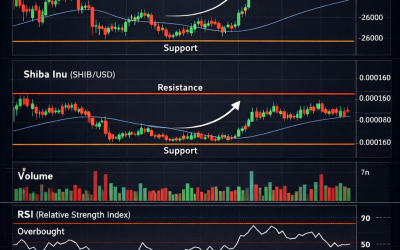
In his recent analysis, John Bollinger highlighted a classic BB Squeeze on Bitcoin, pointing to a potential breakout toward $107,000. This move is based on a tight range (low volatility), which often precedes a high-volume breakout.
📌 Strategy: Trading the BB Squeeze
- Wait for a squeeze (tight bands) on the daily or 4H chart.
- Enter on volume-backed breakout above the upper band.
- Set stop-loss just below the breakout candle low.
- Take profit in phases: key resistance levels and psychological zones (like $100K).
Use this setup only when RSI confirms momentum (above 50) and volume > 20-day average.
2. CME Gaps: The Hidden Danger in Bitcoin Trading
Bitcoin futures trade on the CME and close over weekends, often causing price gaps by Monday. These “CME gaps” tend to get filled eventually, meaning price often retraces to close the gap.
As of January 2026, Bitcoin created two new CME gaps due to a weekend spike (source). These gaps could act as magnets for price retracements.
📌 Strategy: CME Gap Fill Play
- Mark unfilled CME gaps on your chart (use TradingView’s CME:BTC1! ticker).
- Trade short-term reversals when price approaches unfilled gaps.
- Set tight stop-loss above resistance and target the gap fill zone.
Pro Tip: Use the 1H and 4H chart with confluence from EMAs or Fibonacci levels to optimize entries.
3. Reading Market Sentiment with On-Chain and Macro News
Beyond charts, news and macro events drive major crypto moves. As we saw recently:
- Coinbase announced strategic shifts for 2026, signaling increased institutional focus (source).
- Venezuela may elect a pro-Bitcoin leader, potentially triggering wider adoption (source).
📌 Strategy: Sentiment-Driven Swing Trades
- Track macro news via trusted sources (e.g., Twitter/X, CoinDesk, CryptoSlate).
- Look for themes: adoption, regulation, ETF approvals, or stablecoin shifts.
- Use technical confirmation before entering trades based on news.
Combine keyword alerts (Google Alerts, Feedly) with chart setups for maximum edge.
4. Combining Strategies Into a Playbook
Now that you understand the components—technical analysis, CME gaps, sentiment—you can build a trading playbook.
🧰 Example: Bitcoin Trading Plan (Jan 2026)
- Bias: Bullish (based on breakout and market cap growth)
- Entry Trigger: BB breakout above $95,000 with volume
- Risk: Tight stops below $92,000 due to potential CME gap fill
- TP Zone: $100K and $107K based on John Bollinger’s analysis
This hybrid setup reduces emotional trades and gives you a rules-based approach.
5. Common Mistakes to Avoid
Even strong setups can fail if you fall into classic traps. Avoid:
- Overtrading based on headlines without chart validation
- Ignoring risk management – always use stop-losses and position sizing
- Chasing breakouts without volume or confirmation
📉 Remember: Risk comes from not knowing what you’re doing.
Conclusion: Prepare, Plan, Perform
The market today is full of opportunity—but also risk. Whether you’re trading Bitcoin’s Bollinger breakout, watching CME gaps, or responding to macro news, the key is preparation.
Trade with structure. Analyze with discipline. Execute with confidence.
If you want more strategies like these every week, subscribe to our newsletter and stay ahead of the crypto curve.
Resources & Tools
- TradingView – charting and indicators
- Coinglass – funding rates and open interest
- LookIntoBitcoin – on-chain data
- CryptoPanic – news aggregator



0 Comments