


2026 has kicked off with tension in the crypto markets—Bitcoin is coiling up, RSI is flashing signals, and whales are moving in. But how do you turn these clues into real trades? This guide breaks down essential chart-reading strategies and gives you a practical playbook to navigate the year ahead.
Why Technical Analysis Matters in 2026
With Bitcoin’s RSI signaling a breakout and major altcoins like Solana seeing whale accumulation, understanding charts isn’t optional—it’s essential. The crypto market is driven by sentiment, momentum, and pattern recognition. Technical analysis offers a way to decode these forces, helping you avoid emotional decisions and catch high-probability setups.
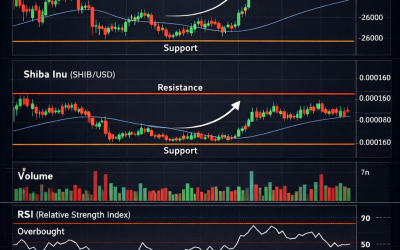
Core Tools You Need to Read Crypto Charts
Before diving into strategies, get comfortable with these essential tools:
- RSI (Relative Strength Index): Measures momentum. Values above 70 indicate overbought conditions, below 30 oversold.
- Support and Resistance Levels: Key price zones where buyers/sellers historically react.
- Moving Averages (MA): Smooth out price data. The 50-day and 200-day are crucial for trend analysis.
- Volume: Confirms price moves. A breakout without volume = fakeout risk.
- MACD: Shows trend direction and momentum shifts.
Strategy #1: The RSI Breakout Play
Bitcoin’s RSI is currently turning higher, hinting at potential breakout energy. Here’s a step-by-step plan to trade RSI breakouts:
- Identify RSI divergence (e.g., price flat/down, RSI rising).
- Wait for RSI to cross above 50 (shows bullish control).
- Confirm with price breaking resistance or trendline.
- Enter position with stop-loss just below breakout level.
- Target recent swing highs or psychological levels (e.g., $48k, $60k).
Pro Tip: Combine RSI with volume for stronger signals. If volume spikes on breakout, it’s time to act.
Strategy #2: Support Zones + Volume Confluence
Coins like Dogecoin at $0.11 are being eyed as potential bottom zones. This strategy helps you buy at strong support zones with reduced risk.
- Use horizontal support lines on daily or weekly charts.
- Watch for spikes in volume near support — this suggests accumulation.
- Check candlestick patterns — hammers, dojis, or engulfing candles near support give entry clues.
- Set stop-loss just below the support level, with 2:1 reward to risk ratio.
Many traders overlook volume in sideways markets, but it’s your secret weapon. If whales are buying near support, you should pay attention.
Strategy #3: Trend Following with Moving Averages
In trending markets, MAs help you stay in trades longer. Here’s a practical trend-following plan:
- Overlay the 50-day and 200-day MA.
- Look for a Golden Cross (50 MA crossing above 200 MA) for bullish entry.
- Use pullbacks to the 50 MA as low-risk entry points.
- Exit when price closes below the 200 MA or MACD crosses bearish.
This strategy is ideal for coins like Solana, where institutional wallets are accumulating, hinting at longer-term bullish intent.
Bonus Strategy: Chart Patterns that Actually Work
Forget about complicated patterns—focus on these 3 reliable ones:
- Ascending Triangle: Bullish continuation. Enter on breakout + volume.
- Falling Wedge: Reversal pattern. Watch for breakout and RSI support.
- Double Bottom: Signals trend reversal. Confirm with neckline break.
These patterns appear in most market cycles. Keep alerts on your trading platform for their formation.
How to Avoid Common Technical Analysis Mistakes
- Trading without confirmation: Wait for signal + volume. Don’t FOMO.
- Ignoring risk management: Always use stop-loss. Risk 1–2% per trade max.
- Overfitting indicators: Stick to 2–3. More tools = more confusion.
Remember: Technical analysis increases probabilities—not guarantees. That’s why you need a repeatable system and strict discipline.
Use This Free Tool to Practice: TradingView
If you’re new to charting, TradingView is your sandbox. Create demo strategies, set alerts, and test your understanding. You can even follow pro traders to see how they interpret live setups.
When Fundamentals Meet Technicals: 2026 Case Study
According to CryptoSlate, 2025 predictions failed because they ignored structural shifts. Use this insight in 2026:
- Pair TA with on-chain data: whale wallets, exchange flows, and developer activity.
- Stay informed with real-time news. Set alerts from CryptoNews.com and CryptoSlate.
- Watch prediction markets like Polymarket to assess sentiment-driven probability.
Take Action: Don’t just consume TA—start applying it! Pull up the DOGE, SOL, and BTC charts and identify current RSI, MA crossovers, and support levels. Are you seeing what the whales see?
Final Thoughts: Build Your 2026 Trading Playbook
Whether you’re riding a Bitcoin breakout or looking for bottom entries in altcoins, technical analysis is your roadmap in 2026. Focus on:
- Mastering RSI and support/resistance reactions
- Using volume as confirmation
- Following price trends with moving averages
- Practicing constantly on platforms like TradingView
And finally, join a community or trading group to validate your setups and accelerate your learning. Never trade alone.
Ready to level up your charting game? Subscribe to our weekly newsletter for real-time market setups, strategy guides, and expert interviews. Click here to join for free.
Your edge in 2026 won’t be from hype—it’ll come from clarity, discipline, and execution. Start now.




0 Comments