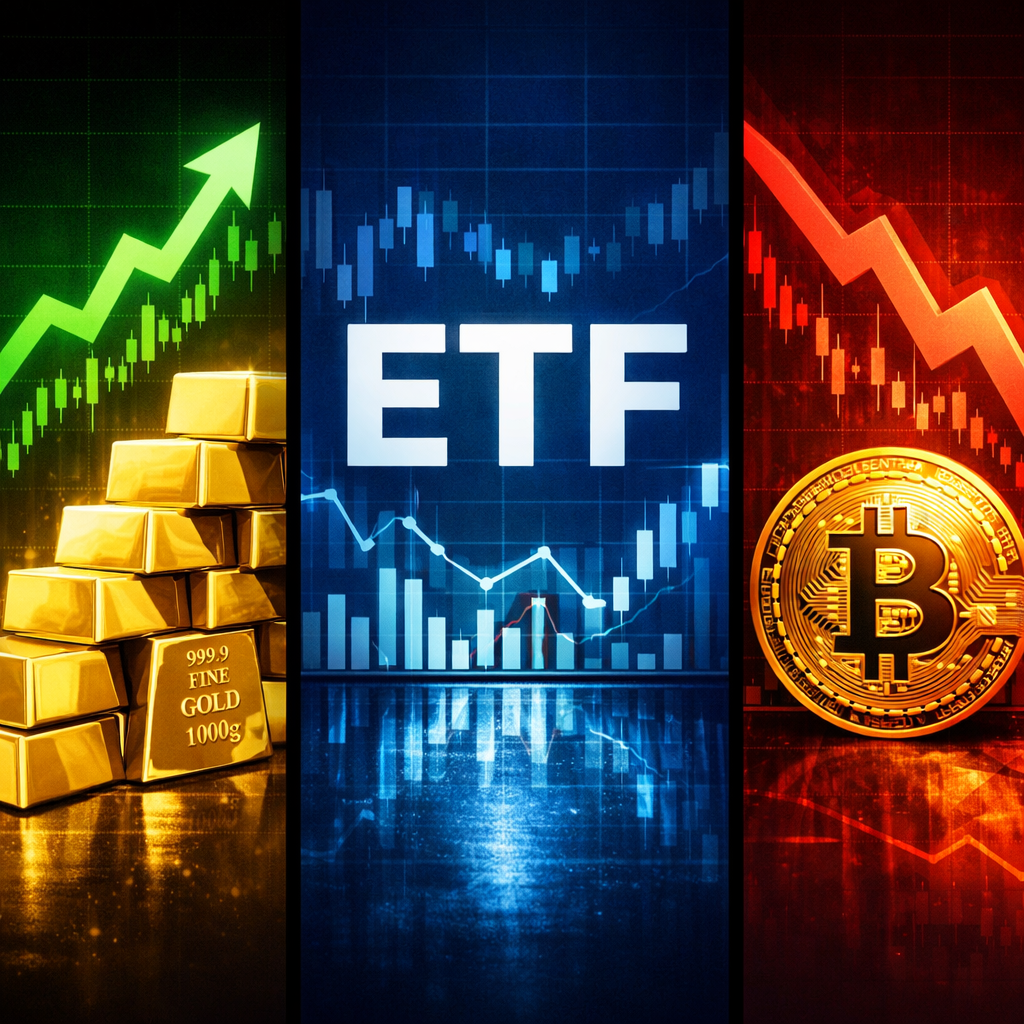

With gold hitting record highs and Bitcoin plunging amidst geopolitical tension, is your portfolio truly diversified? Discover how ETFs can be a stable anchor in volatile markets.
Understanding the Current Market Landscape
On January 19, 2026, the global financial markets experienced a seismic shift. Gold surged to all-time highs as investors fled to safety amidst fresh US–EU tariff tensions, while Bitcoin failed to meet its ‘digital gold’ promise, dropping sharply.
At the same time, analysts at Myrmikan Capital note that gold’s rise signals profound structural weaknesses in the US stock market. These events underscore the importance of having a resilient, well-diversified investment strategy — and ETFs (Exchange Traded Funds) can play a key role.
Why ETFs Are Powerful in Times of Volatility
ETFs provide investors with diversified exposure to a basket of assets — whether it’s stocks, bonds, commodities, or sectors — at a low cost. During turbulent times, ETFs offer liquidity, flexibility, and risk management.
For example, instead of trying to pick individual tech stocks in a volatile market, you might invest in the Invesco QQQ ETF to gain exposure to the Nasdaq-100 index. This reduces the risk of any single company’s poor performance while allowing participation in the sector’s overall growth.
How To Build a Resilient ETF Portfolio
Here are some steps to construct a sturdy ETF portfolio suited for economic uncertainty in 2026:
1. **Start with a Core Allocation**
Build a foundation using broad-based index ETFs like:
These ETFs provide exposure to the largest US companies and are ideal for long-term growth.
2. **Add Inflation Hedges**
With inflation and geopolitical risks escalating, consider hedging with commodity-based ETFs such as:
Gold and silver have historically preserved value during instability — a trend reinforced by recent market action.
3. **Incorporate International Diversification**
Don’t limit your exposure to US markets. Use ETFs like:
- iShares MSCI EAFE ETF (EFA) — Developed international markets
- iShares MSCI Emerging Markets ETF (EEM)
This approach cushions your portfolio from country-specific risks and captures global growth.
Actionable Strategy: The 60/40 ETF Portfolio
A classic allocation strategy, the 60/40 portfolio — 60% in equities, 40% in bonds — offers balanced risk and return. Here’s an example with ETFs:
- 60% Equities: 30% VOO (US large-cap), 15% EFA (international), 15% QQQ (tech)
- 40% Bonds: 20% BND (Total Bond Market), 10% IEF (7-10 Year Treasury), 10% TIPS (inflation-protected securities)
This diversified approach smooths out volatility while still allowing for capital appreciation.
💡 Pro Tip: Use Sector ETFs for Tactical Plays
If you believe in the short-term momentum of a specific sector, ETFs allow you to act quickly. For example:
Example: If tariff tensions dampen tech exports, but healthcare remains strong, rotating into XLV could mitigate losses.
Tax Efficiency and Cost Matters
ETFs are generally more tax-efficient than mutual funds due to their unique creation/redemption process. Additionally, many ETFs offer expense ratios under 0.10%, meaning more of your money stays invested.
Compare ETF costs easily using tools like ETF.com’s Fund Comparison Tool.
⚡CTA #1: Ready to Build Your ETF Portfolio?
Click here to explore top-rated ETFs on Fidelity and start investing with a strategy that aligns with current economic trends.
Common Mistakes to Avoid
- Overconcentration: Don’t invest too heavily in one sector or region.
- Chasing Performance: Just because an ETF performed well last year doesn’t guarantee future success.
- Ignoring Expense Ratios: A small difference in fees adds up over time.
Tip: Regularly rebalance your portfolio to maintain your target asset allocation.
How Geopolitics Are Shaping Investment Decisions
As seen in the crypto market’s 3% drop and gold’s surge on January 19, 2026, global politics directly impact asset classes. ETFs react quickly to such events, making them ideal tools for agile investors.
For example, an investor concerned about US–EU trade conflict might reduce exposure to European equities or increase holdings in defensive sectors like utilities or health care.
📈 CTA #2: Take Your Knowledge Further
Use Morningstar’s ETF Screener to find ETFs that match your risk tolerance, goals, and fee preferences. Smart investing starts with the right tools.
Final Thoughts
2026 is already proving unpredictable. But with a carefully designed ETF strategy, grounded in fundamental assets like gold and diversified equity indexes, you can weather volatility and position your portfolio for long-term success.
Remember: Rather than react emotionally to short-term news, build a systematic investment plan using ETFs and rebalance periodically. In uncertain times, clarity comes from structure.
Further Reading
- ETF vs Mutual Fund – Investopedia
- Three-Fund Portfolio – Bogleheads
- iShares Total US Stock Market (ITOT)


0 Comments