
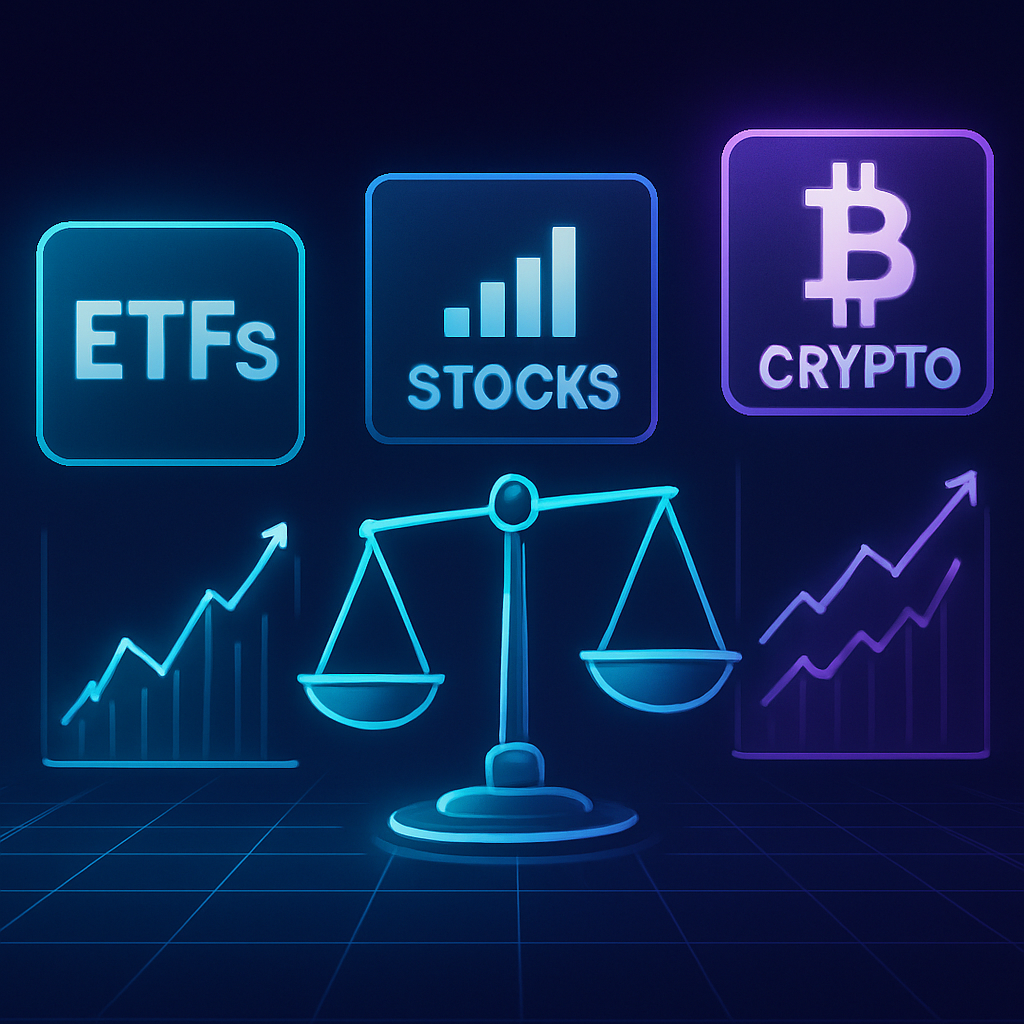

ETFs continue to dominate the modern investment landscape—offering diversification, liquidity, and low fees. But how do you navigate them effectively in 2026?
Understanding ETF Investment Strategies: Why ETFs Remain a Smart Choice
Exchange-Traded Funds (ETFs) have become a cornerstone of modern portfolio management. In 2026, more than $10 trillion globally is invested in ETFs, confirming their appeal across both retail and institutional investors. But with growing variety—from sector-specific ETFs to crypto-linked funds—understanding how to use them strategically is more important than ever.
Let’s break down actionable ETF strategies that can help you build long-term wealth.
1. Core-Satellite Strategy: Build a Stable Foundation
The core-satellite strategy involves setting a solid investment base (core) with diversified ETFs and then adding smaller, more aggressive positions (satellites) for growth.
- Core: Consider low-cost, diversified ETFs like the Vanguard Total Stock Market ETF (VTI) or SPDR S&P 500 ETF (SPY).
- Satellite: Add ETFs focused on sectors such as AI, clean energy, or emerging markets.
Example: A $50,000 investment portfolio might allocate $35,000 to SPY/VTI and $15,000 to thematic ETFs like ARK Innovation ETF (ARKK) or a new crypto-based ETF.
2. The Rise of Alternative ETFs: Crypto, Real Assets & Beyond
One major trend in 2026 is the expansion of ETFs into crypto and real-world assets (RWAs). For example, Grayscale has filed for new ETFs focused on BNB and Hyperliquid (HYPE), marking a new step in digital asset adoption by mainstream investment vehicles.
These ETFs allow exposure to blockchain and crypto innovation without the complexities of digital wallets or private keys.
Important Tip: Crypto ETFs can be highly volatile. Limit exposure to 5-10% of your portfolio unless you’re an experienced investor.
3. Leveraging Market Trends: Sector Rotation with ETFs
Timing the market can be risky, but strategic sector rotation using ETFs is a savvy way to potentially enhance returns. For example, if inflation rises, you might rotate into energy or commodity ETFs like iShares Global Energy ETF (IXC).
Use tools like: Fidelity ETF Screener or ETF.com to compare sector performance.
Example: In Q4 2025, AI and semiconductor ETFs outperformed due to increased demand for compute power—you could have capitalized by holding Global X AI ETF (AIQ).
4. Tax Efficiency and Long-Term Gains
ETFs offer significant tax advantages over mutual funds due to their in-kind redemption structure. Investors can defer capital gains, making ETFs a tax-efficient choice for long-term growth.
Tip: Consider holding ETFs in tax-advantaged accounts like IRAs to maximize compound return potential.
Set up a Charles Schwab IRA or use Vanguard to automate contributions.
5. Risk Management: Don’t Chase the Hype
While articles like this one tout 100x crypto returns, most speculative tokens never recover. In fact, $880 million was spent on token buybacks in 2025, yet prices still stalled (source).
Lesson: Treat hype-driven assets as lottery tickets, not your core investment.
Risk Control Tips:
- Limit high-risk ETFs or tokens to no more than 5% of your total portfolio.
- Use dollar-cost averaging (DCA) to reduce timing risk.
- Rebalance quarterly to maintain your asset allocation.
6. What’s Next: Regulatory Shifts You Should Watch
The South Korean Supreme Court ruling allowing seizure of Bitcoin on exchanges marks a global shift towards stricter crypto regulation. Investors should monitor ETF filings and legal updates, especially if holding international products.
Actionable Step: Use ETF Database to track new ETF registrations and compliance news.
Final Thoughts: ETFs Are Tools—Your Strategy Is the Blueprint
ETFs are not a ‘set it and forget it’ solution. They’re powerful instruments when used with intentional strategy, diversification, and clear risk tolerance.
Whether you’re just starting or refining your portfolio, stay informed, stay diversified, and stay disciplined.


0 Comments