
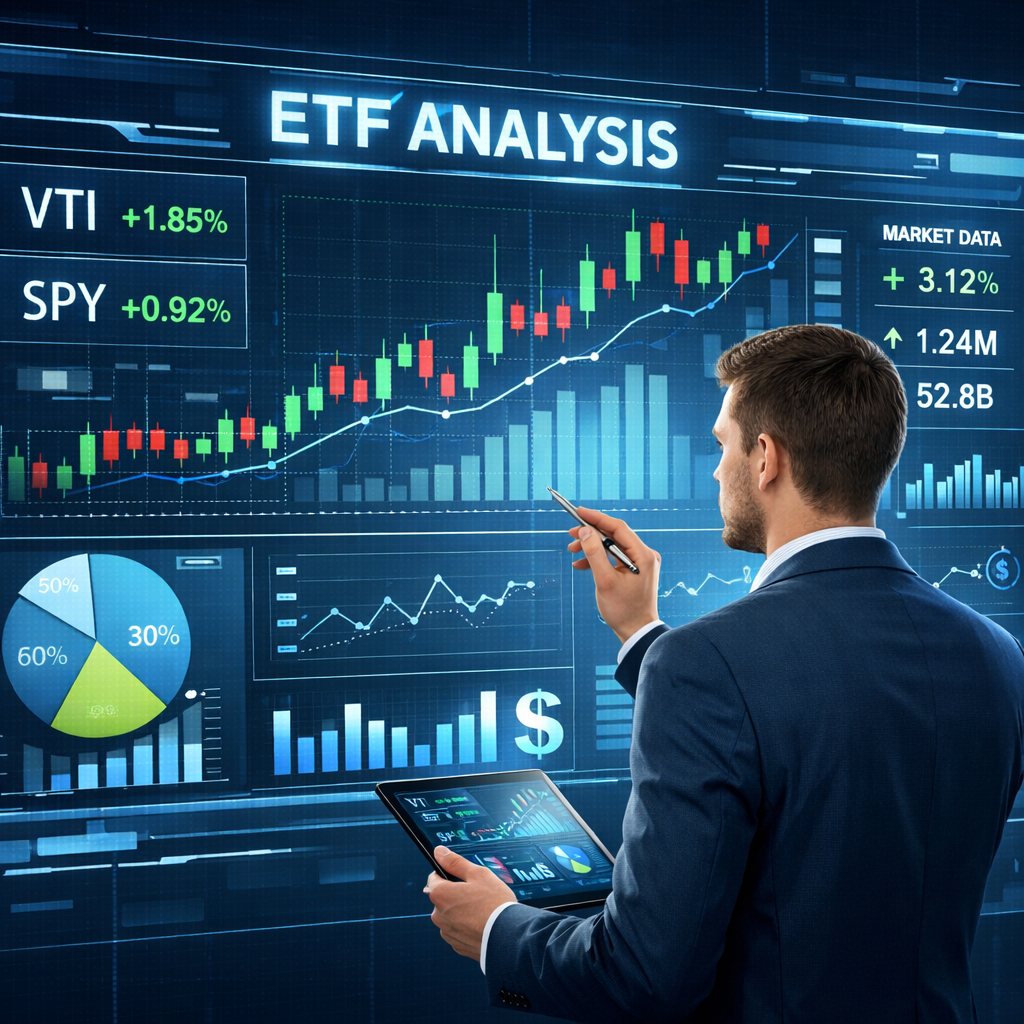

ETFs are revolutionizing how everyday investors access the stock market. Here’s how you can craft a smart, diversified strategy in 2026—even in an uncertain macro environment.
Why ETFs Still Make Sense in 2026
Exchange-Traded Funds (ETFs) have become one of the most efficient and accessible ways to invest in diversified portfolios without picking individual stocks. In 2026, with the Federal Reserve policy uncertainty and speculative crypto sectors like memecoins creating noise, ETFs offer a grounded way to grow wealth.
Understanding ETFs: A Quick Refresher
An ETF is a basket of securities—typically stocks, bonds, or commodities—that you can trade like a single stock on an exchange. This structure allows for simple diversification and lower fees than mutual funds. Popular ETFs include:
- SPY – Tracks the S&P 500
- QQQ – Tracks the Nasdaq-100
- VTI – Covers the total US stock market
- VEA – Focuses on developed markets outside the US
Three Trends Driving ETF Growth in 2026
- Macroeconomic Volatility: With inflation and interest rates in flux, passive ETFs provide a stable foundation in turbulent markets.
- Institutional Adoption: As noted in Bitcoin’s institutional turn, more traditional investors are entering ETFs and digital asset ETFs.
- Technology and Automation: Robo-advisors like Betterment and Wealthfront are driving ETF adoption with smart rebalancing and tax strategies.
Step-by-Step: Building Your 2026 ETF Portfolio
Let’s walk through creating a long-term ETF portfolio.
1. Define Your Investment Goal
Are you investing for retirement, a home purchase, or general wealth building? Your goal defines your time horizon and risk appetite.
2. Choose Your Asset Allocation
Here’s a basic allocation model for a moderate risk investor in 2026:
- 60% US Equities (e.g., VTI)
- 20% International Equities (e.g., VEA)
- 10% Bonds (e.g., AGG)
- 10% Alternatives (e.g., IAU for gold)
3. Determine Investment Method
Automate your investments with a dollar-cost averaging strategy. Invest a fixed amount monthly into your ETF portfolio to smooth out volatility.
Tip: Use platforms like Fidelity or Vanguard for low-cost ETF investing.
Actionable ETF Strategies for 2026
Strategy 1: The Core-Satellite Approach
Build a “core” portfolio of broad ETFs (like VTI or SPY), and add “satellite” positions in sector-specific ETFs such as:
- ICLN – Clean energy
- ARKK – Innovation (be cautious of volatility)
- IBB – Biotech
Strategy 2: Thematic Investing
In 2026, themes like AI, DeFi, and Green Tech are gaining traction. Consider ETFs like:
*Important: These are high-growth, high-risk options—ideal for small satellite positions only.
Managing Risk in Your ETF Portfolio
While ETFs are diversified, they’re not risk-free. Protect yourself by:
- Rebalancing semi-annually
- Keeping 6–12 months of expenses in an emergency fund
- Avoiding over-concentration in any one sector or theme
Tax Efficiency Tips
Use tax-advantaged accounts like IRAs or Roth IRAs to shelter gains. ETFs are already tax-efficient due to their in-kind redemption structure, but you can further optimize by:
- Harvesting tax losses during market dips
- Holding income-generating ETFs in tax-deferred accounts
📌 CTA #1: Ready to Build Your ETF Portfolio?
Start investing with Vanguard today. Choose from hundreds of low-fee ETFs and set up automatic contributions.
Monitoring the Market: What to Watch in 2026
Keep your eye on:
- Federal Reserve rate decisions – These impact bond ETFs and growth stock valuations.
- Crypto spillovers – As speculative assets like Chinese memecoins spike, volatility could bleed into traditional markets.
- Global economic data – ETFs like VEA and VWO depend on international growth.
📈 CTA #2: Get a Free Portfolio Review
Want to check if your ETF mix is optimized for today’s market? Get a free analysis with Personal Capital.
Final Thoughts
In 2026, investing doesn’t have to be complicated—or speculative. ETFs give you the tools to create a diversified, low-cost portfolio that grows with the market. By focusing on your goals, automating your contributions, and staying informed, you can thrive regardless of short-term fluctuations.
Smart investing is long-term investing. The earlier you start, the better your outcome.


0 Comments