


With crypto volatility surging and AI enforcement reshaping trading environments, investors are seeking stability—ETFs might be your answer.
Understanding the Current Market Landscape
February 2026 has kicked off with high volatility in the financial markets, particularly in the crypto sector. According to CryptoNews, the overall crypto market fell by 2.9% in just 24 hours, with 91 out of the top 100 coins trading in the red. Additionally, South Korea has introduced AI surveillance tools that could lead to life imprisonment for unfair crypto trades.
As uncertainty grows, many investors are looking for more stable, regulated, and diversified investment vehicles. That’s where ETFs—or Exchange-Traded Funds—come in.
What Are ETFs?
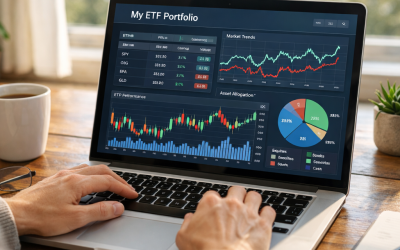
ETFs are investment funds that trade on stock exchanges, much like individual stocks. They typically track an index, sector, commodity, or other asset. Because they offer exposure to a wide array of securities, they help reduce individual asset risk.
Example: The SPDR S&P 500 ETF (SPY) tracks the performance of the S&P 500. By buying shares of SPY, you’re effectively investing in all 500 companies in the index.
Why ETFs Are Especially Valuable in Volatile Markets
- Diversification: You mitigate risk by spreading your investment across a broad portfolio.
- Liquidity: ETFs can be bought and sold throughout the trading day, unlike mutual funds that settle at the end of the day.
- Cost-Efficiency: Most ETFs have lower fees compared to mutual funds.
- Transparency: Holdings in ETFs are publicly available and often updated daily.
Top ETF Strategies to Navigate Market Uncertainty
1. The Core-Satellite Strategy
Build a stable “core” with broad-market ETFs like VTI (Vanguard Total Stock Market ETF) or VOO (Vanguard S&P 500 ETF). Add “satellites” around it—these could be thematic ETFs like ARKK (Ark Innovation ETF) or sector-specific options like XLV (Health Care).
Why it works: This strategy balances long-term growth with the potential for alpha.
2. Defensive Sector Allocation
In times of economic slowdown or market correction, certain sectors tend to outperform:
Pro Tip: These sectors usually have stable cash flow and are less sensitive to recessions.
3. Dollar-Cost Averaging (DCA)
Invest a fixed amount regularly—e.g., $200 every month—regardless of market conditions. This strategy lowers the impact of volatility and reduces emotional investing.
Real-world application: Use platforms like Vanguard or Fidelity to automate your DCA into ETFs.
Tax-Efficient ETF Investing
ETFs are generally more tax-efficient than mutual funds due to their structure. They allow in-kind redemptions, which help minimize capital gains distributions.
Use tax-advantaged accounts (like Roth IRAs or HSAs) to maximize ETF benefits.
Global Events and Their Impact on ETFs
With Binance pledging to buy large amounts of Bitcoin as a form of financial apology and investors pulling away from U.S.-centric assets (“Bye America” trend), global macro shifts can’t be ignored.
Actionable Tip: Consider global ETFs like VGK (Europe) or EEM (Emerging Markets) to diversify internationally.
Risks to Watch Out For
- Tracking Error: ETF returns may deviate slightly from the index.
- Liquidity: Some niche ETFs have low trading volume, causing wide bid-ask spreads.
- Overconcentration: Some ETFs may hold large positions in just a few stocks.
Use tools like Morningstar ETF Screener to evaluate ETF holdings, fees, and risks.
Best Practices for ETF Investors
- Rebalance quarterly to maintain your asset allocation goals.
- Use limit orders during volatile markets to avoid slippage.
- Stay informed via ETF-focused news platforms like ETFdb.
Final Thoughts
As AI begins policing crypto and institutional players like Binance scramble to restore confidence, traditional markets and ETFs offer a more transparent and regulated alternative. By using strategic ETF investments, you can weather market storms, diversify effectively, and keep emotions out of your portfolio.
🚀 Ready to Start Investing in ETFs?
Open a Fidelity account today and start building your ETF portfolio in minutes.
📘 Free Resource: ETF Investment Guide
Download our free ETF Starter Guide from Investopedia and learn how to choose the right ETFs for your goals.


0 Comments