
With Bitcoin underperforming and regulatory ambiguity swirling around crypto, traditional ETF strategies are making a strong comeback. Here’s how to protect and grow your wealth through low-cost, diversified ETFs—especially in volatile markets.
Why ETFs Matter More Than Ever in 2026
The financial landscape heading into 2026 is increasingly complex. Bitcoin remains nearly 30% below its all-time high while gold hits historic records above $4,400. Regulatory uncertainty—exemplified by the stalled CLARITY Act—has further unsettled crypto investors. Meanwhile, market-wide inflation concerns and geopolitical risks are encouraging investors to seek safer, more resilient strategies.
Enter Exchange-Traded Funds (ETFs)—a reliable, cost-effective way to gain diversified exposure to different asset classes without the complexity of individual stock or crypto selection.
What Is an ETF and Why Should You Care?
An ETF is a basket of securities—stocks, bonds, commodities—that trades on an exchange like a stock. Unlike mutual funds, ETFs are often cheaper, more tax-efficient, and easier to trade. Whether you’re a beginner or a seasoned investor, ETFs can help you smooth volatility, lower fees, and increase long-term returns.
Step-by-Step: How to Build a Resilient ETF Portfolio
1. Start with a Core-Satellite Approach
Core-satellite investing involves building your portfolio around a “core” of diversified, low-cost ETFs, and adding “satellites” for higher growth or exposure to specific sectors or themes.
- Core: Total market or S&P 500 ETFs like Vanguard Total Stock Market ETF (VTI) or SPDR S&P 500 ETF (SPY).
- Satellites: Sector-specific ETFs such as ICLN (Clean Energy) or BOTZ (Robotics & AI).
2. Diversify Across Asset Classes
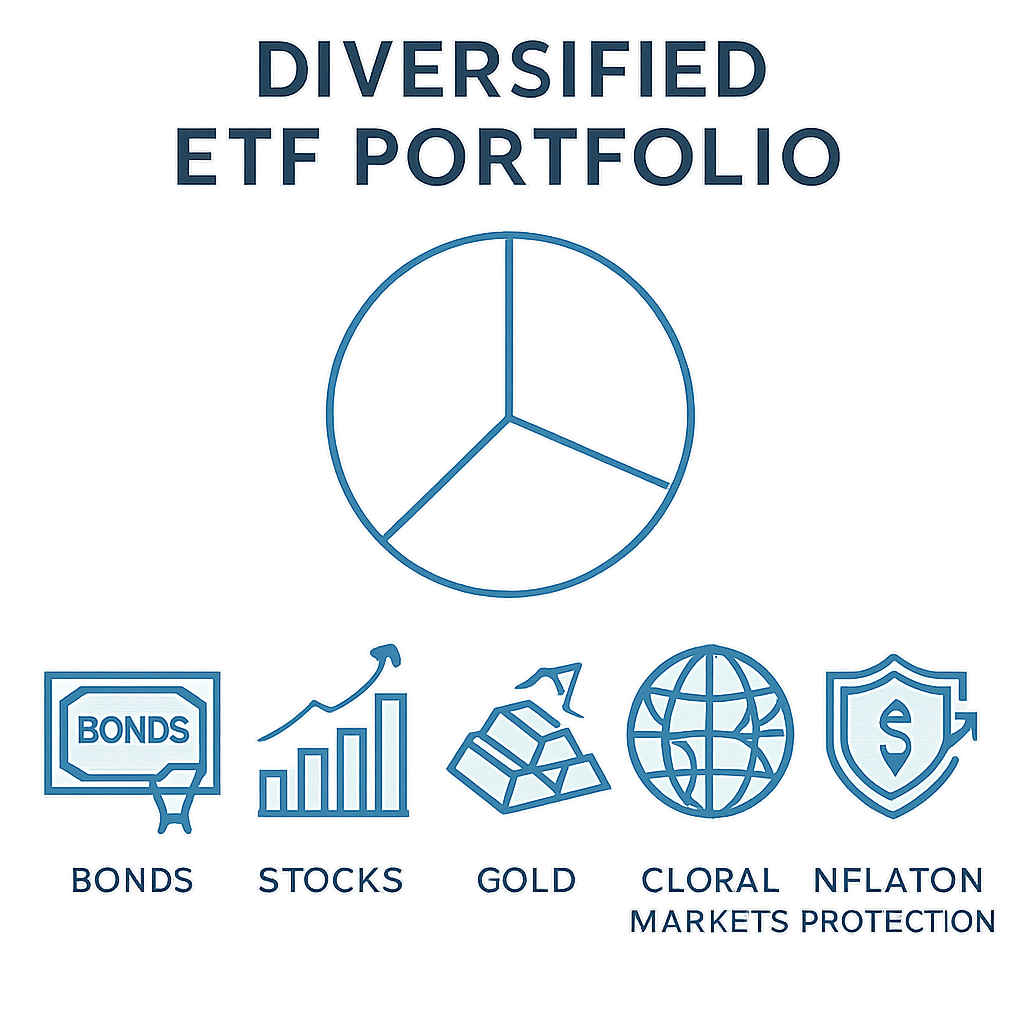
Don’t just hold stocks. Add ETFs that track bonds, commodities, or real estate:
- Bonds: Vanguard Total Bond Market ETF (BND)
- Gold: SPDR Gold Shares (GLD) – especially relevant given gold’s 2025 rally
- REITs: iShares Global REIT ETF (REET)
3. Factor in Global Exposure
With U.S. equities facing valuation pressures, it’s wise to gain international exposure:
- Developed Markets: iShares MSCI EAFE ETF (EFA)
- Emerging Markets: Vanguard FTSE Emerging Markets ETF (VWO)
4. Adjust for Risk Tolerance and Time Horizon
Use your age, income needs, and risk appetite to set your allocation. A general rule:
- Age 20–35: 90% stocks / 10% bonds
- Age 35–55: 70% stocks / 30% bonds
- 55+ or nearing retirement: 50% stocks / 50% bonds
Tool tip: Use the Portfolio Visualizer to simulate your allocations over time.
Smart Moves for 2026: Defensive and Thematic ETFs
Given market volatility from crypto uncertainty and gold’s breakout, consider these ETFs as part of your satellite strategy:
Defensive ETFs
Inflation Hedges
- TIPS: Vanguard Short-Term Inflation-Protected Securities ETF (VTIP)
- Commodities: Invesco DB Commodity Index Tracking Fund (DBC)
Actionable Tips to Maximize ETF Returns
- Use tax-loss harvesting: Sell losing ETFs to offset capital gains.
- Stick to low-fee options: Look for ETFs with expense ratios under 0.10%.
- Rebalance annually: Reset your portfolio to target allocations to avoid drift.
⚡️CTA #1: Free Portfolio Checkup
Want a second opinion on your ETF mix? Try this free portfolio analyzer and make sure you’re not overexposed to risk.
ETF Investing Mistakes to Avoid
- Chasing performance: Just because an ETF is up 30% doesn’t mean it’s a buy.
- Ignoring liquidity: Low-volume ETFs can have wide bid-ask spreads.
- Over-diversifying: Holding too many overlapping ETFs can dilute returns.
ETF vs. Crypto: A Stability Comparison
As the Bitcoin miner crisis and TRUMP token fallout show, crypto remains highly speculative. ETFs offer:
- Transparency – Holdings are public and regulated
- Liquidity – Easy to buy/sell through major brokerages
- Stability – No protocol risks or token collapses
Conclusion: Play the Long Game
ETFs provide clarity in a world of uncertainty. Whether you’re navigating post-pandemic economic shifts, regulatory shakeups in crypto, or sector rotations, a well-diversified ETF portfolio can help you stay the course.
🔔 CTA #2: Start Investing with Just $5
Ready to test the waters? Sign up with Fidelity or Charles Schwab to begin building your low-cost, diversified ETF portfolio today.


0 Comments