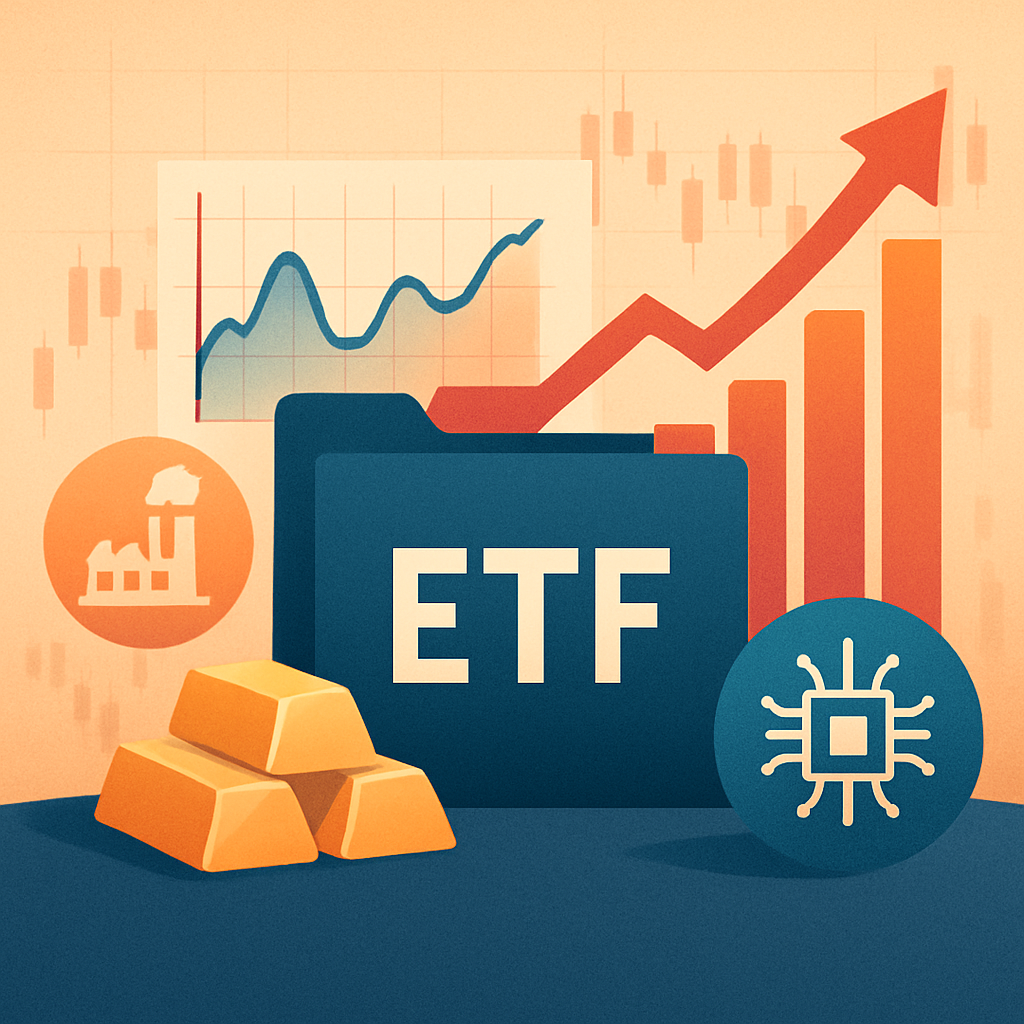

With the financial world facing uncertainty—Bitcoin’s underperformance, gold’s record highs, and regulatory confusion in crypto—savvy investors are revisiting ETFs as a reliable way to grow and protect wealth. Here’s how you can build a resilient ETF portfolio that thrives in any market condition.
Why ETFs Are a Smart Choice in Volatile Markets
Exchange-Traded Funds (ETFs) have become a cornerstone of modern investing, offering diversification, low fees, and flexibility. In 2026, with geopolitical tensions, inflation uncertainty, and crypto-market instability (see Bitcoin’s underperformance), ETFs provide a stable alternative.
Unlike individual stocks or speculative crypto tokens, ETFs spread risk across multiple assets. This makes them ideal for uncertain times—something personal finance expert Vanguard and Fidelity emphasize for long-term wealth building.
Step-by-Step: Building a Recession-Proof ETF Portfolio
1. Allocate Based on Risk Tolerance
Before choosing ETFs, assess your risk tolerance using tools like the SEC’s Risk Tolerance Quiz. From there, you can decide on a mix of:
- Equity ETFs – For growth (e.g., S&P 500 ETFs like VOO)
- Bond ETFs – For stability and income (e.g., BND, AGG)
- Commodity ETFs – As inflation hedges (e.g., Gold ETFs like GLD)
- Alternative ETFs – For diversification (e.g., Real Estate ETFs like VNQ)
2. Use Core-Satellite Strategy
The core-satellite approach builds a strong foundation with broad-market ETFs, then adds targeted ETFs for higher return potential.
Example:
- Core: 70% in total market ETFs (e.g., VTI, ITOT)
- Satellite: 30% in thematic or sector ETFs (e.g., ARKK for innovation, ICLN for clean energy)
This strategy offers stability with room for growth.
Navigating the 2026 Landscape: What to Watch
Given recent events like the CLARITY Act’s unclear DeFi regulation and partisan crypto policy battles, investors should proceed cautiously in digital asset ETFs. For now, focus on:
- High-quality dividend ETFs – Deliver steady income (e.g., VYM, SCHD)
- Gold & Inflation-Protected ETFs – Protect against purchasing power erosion (e.g., IAU, TIP)
- International ETFs – Hedge against U.S.-only exposure (e.g., VEA, VWO)
Tax Efficiency and Cost: Keep More of What You Earn
ETFs are generally tax-efficient due to their unique structure. However, be mindful of:
- Expense Ratios – Aim for below 0.15% on core holdings
- Capital Gains Exposure – Prefer ETFs over mutual funds for taxable accounts
Morningstar’s ETF Screener is a great tool to find low-fee, tax-efficient ETFs.
Automate and Rebalance
Set up automatic investments via platforms like Fidelity or Vanguard. Rebalance your portfolio quarterly to maintain your target allocation.
Example: If stocks surge and now make up 80% instead of 70%, sell some stocks and buy bonds to restore balance. This enforces buy-low, sell-high discipline.
ETF Investing Tools You Need
- ETF.com Screener – Filter by sector, performance, issuer
- Portfolio Visualizer – Backtest and optimize ETF allocations
- Bogleheads Three-Fund Portfolio – A timeless low-cost strategy
💡 Tip: Use fractional shares via brokers like Robinhood or SoFi if you’re starting small.
Common Mistakes to Avoid
- Chasing performance – Past winners aren’t guaranteed future success
- Ignoring fees – A 1% fee can cost six figures over 30 years
- Over-diversifying – Holding too many overlapping ETFs can dilute performance
Call to Action #1
✅ Ready to start? Use M1 Finance to build your ETF pie today with zero commission and automatic rebalancing.
Call to Action #2
📘 FREE GUIDE: Download our Ultimate ETF Investing Guide from Investopedia and learn how to pick the perfect fund for your goals.
Final Thoughts
In 2026’s turbulent market, a well-constructed ETF portfolio is your best defense—and offense. With smart allocation, automation, and discipline, you can ride out market storms and build long-term wealth. Whether you’re new to investing or looking to optimize, ETFs offer the tools to succeed.
Don’t just save money—make it work for you.


0 Comments