
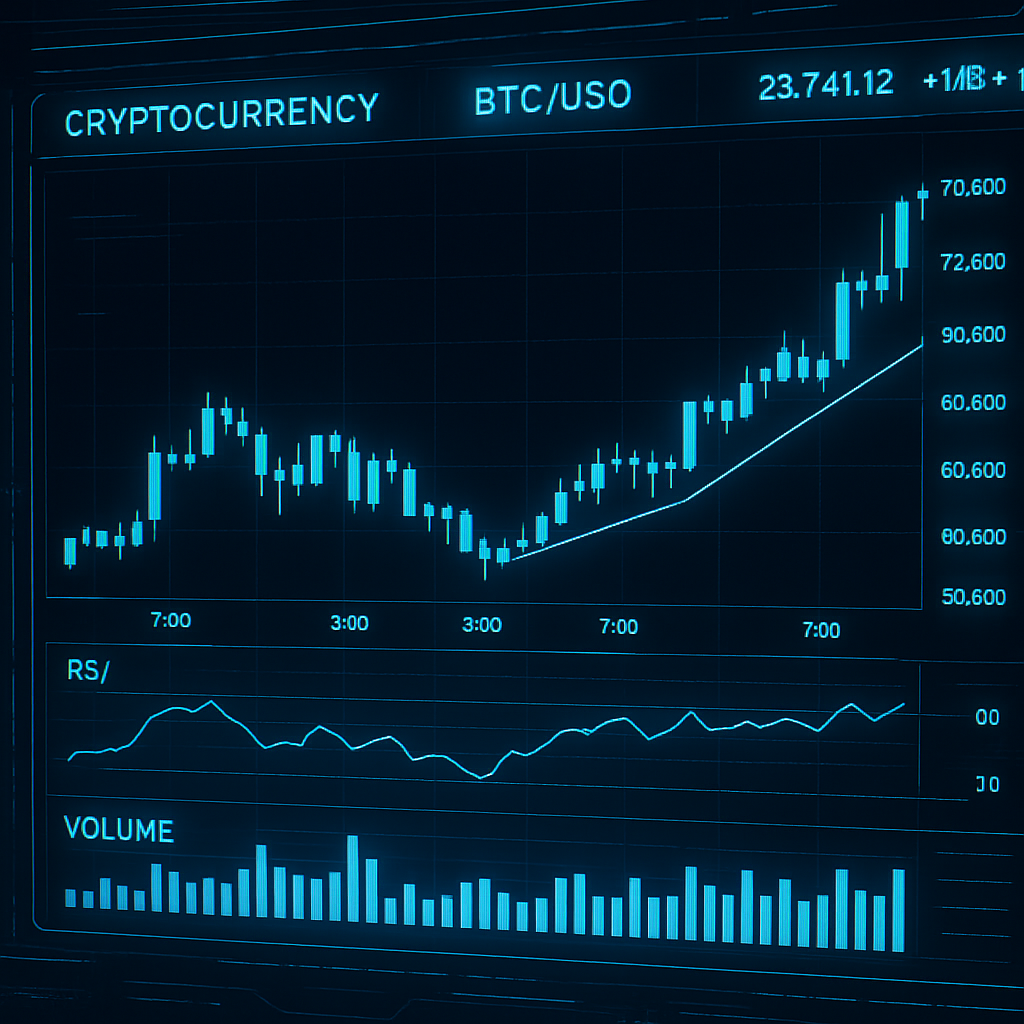

Bitcoin just surged past $92K and altcoins like Solana are making bold moves—but how do you know when to buy, sell, or hold? Mastering chart analysis can give you the edge you need in today’s AI-driven markets.
Why Technical Analysis Still Matters in 2025
With AGI reshaping how markets operate and major players like Vanguard reopening access to Bitcoin ETFs, many traders are wondering: Is there still room for manual, strategic trading?
Yes—especially when you know how to read a chart. While AI and algorithms dominate high-frequency trading, human traders with a solid technical foundation can make highly profitable decisions by identifying key levels, trends, and setups.
Understanding Candlestick Charts
The candlestick chart is the go-to tool for crypto traders. Each candle represents price action over a set time period (e.g., 1 hour, 4 hours, 1 day).
- Green candles (bullish) = closing price higher than opening
- Red candles (bearish) = closing price lower than opening
- Wicks = highs and lows during that period
Pro tip: Use larger timeframes (daily, weekly) for trend analysis and smaller ones (15-min, 1-hour) for entry/exit timing.
Key Patterns to Watch
Here are four essential patterns every crypto trader should recognize:
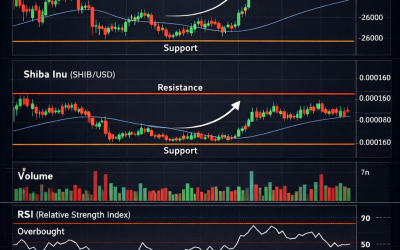
- Support and Resistance: These are price levels where the market tends to reverse. For example, Bitcoin recently bounced at $90,000 before pushing toward $92K, indicating strong support.
- Head and Shoulders: A bearish reversal pattern. Watch for this near resistance zones.
- Ascending Triangle: A bullish continuation pattern, perfect for breakout trades.
- Bull Flags: After a steep rise, a flag pattern can mean more upside. Look for these on BTC and fast-rising altcoins like Solana.
Indicators That Actually Work
There are thousands of indicators, but only a few are consistently effective. Here’s what to focus on:
1. Relative Strength Index (RSI)
RSI tracks momentum. A value over 70 means overbought, under 30 means oversold. When BTC recently hit $91K, a high RSI warned of a pullback.
2. Moving Averages (MA)
The 50-day and 200-day MAs are popular. When the short-term crosses above the long-term—called a Golden Cross—it signals a bullish trend.
3. Volume
Volume confirms moves. Price jumping on low volume is weak. Look for volume spikes on breakouts.
Actionable Strategy: The Breakout-Backtest Play
Here’s a proven trading strategy you can apply on BTC, ETH, or SOL:
- Identify consolidation zones (sideways movement).
- Wait for a breakout above resistance.
- Don’t enter immediately. Wait for price to retest the breakout zone.
- Enter on bounce with tight stop-loss below support.
- Target: Next resistance or use a risk-reward ratio of 2:1.
Example: If Solana breaks above $75 and then retests that level, a bounce could signal a move to $90+.
Bitcoin-Specific Strategy for This Week
Given the recent surge to $92K and ETF-driven momentum, BTC is in a bullish trend. Here’s a tactical setup:
- Buy Zone: $89,500–$90,000 (support range)
- Entry Trigger: Bullish candlestick formation (Hammer, Engulfing) on the 4H chart
- Stop Loss: $88,000
- Target 1: $95,000
- Target 2: $100,000 (psychological level)
Tools You Should Be Using
For charting and alerts:
- TradingView – industry standard for crypto charting
- CoinMarketCap – market data and volume tracking
- CryptoNews: Best Altcoins Today – find hot opportunities daily
CTA #1: Ready to Level Up Your Trading Game?
Subscribe to our free weekly newsletter for curated chart setups, altcoin picks, and exclusive video breakdowns. Don’t miss the next breakout—join now.
How AI Is Changing the Game—and How You Can Still Win
While day trading is shifting due to AI market makers, swing trading and smart entry/exit strategies based on technical analysis are more relevant than ever. You don’t need to beat the bots—you just need to be one step ahead of the average trader.
Smart traders adapt, not abandon. Use AI as a tool, not a threat.
CTA #2: Watch Our Free Beginner’s Guide to Charting
Just getting started? We’ve put together a 30-minute video course on how to master crypto charts—even if you’ve never traded before. Click here to watch it free.
Final Thoughts
The markets are rapidly evolving, but the fundamentals of chart analysis remain unchanged. By learning how to read candlesticks, identify patterns, and apply disciplined strategies, you’ll be positioned to navigate both bull and bear cycles with confidence.
Don’t chase moves. Read the charts. Make smart entries. Stick to your plan.
Whether you’re trading Bitcoin, Ethereum, or Solana—the chart is your edge.



0 Comments